
The UAE’s OPEC exit may destabilize global oil markets, heightening geopolitical tensions and potentially driving up oil prices significantly. The post UAE exits OPEC amid Gulf tensions, impacting oil market dynamics appeared first on Crypto Briefing.

In a 30-page response filed Tuesday, attorneys for victims of three North Korea terrorism cases reframed the April 18 Aave hack as fraud rather than theft — a distinction that could give the attackers legal title to the borrowed crypto.
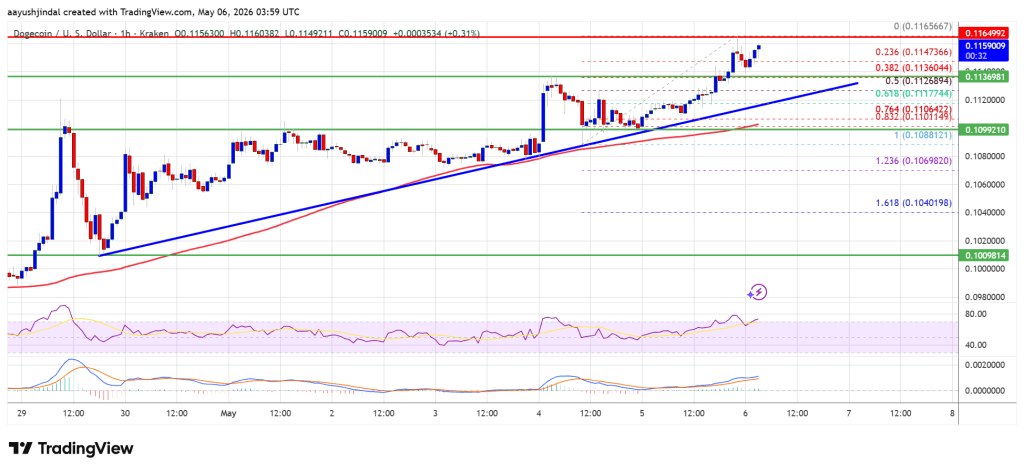
Dogecoin started a decent increase above $0.1080 against the US Dollar. DOGE is now consolidating and might aim for an upside break above $0.1165. DOGE price started a fresh increase above $0.1120 and $0.1150. The price is trading above the $0.1120 level and the 100-hourly simple moving average. There is a bullish trend line forming […]
The crypto market just witnessed a bold move that caught serious attention. A newly created wallet deployed $3.7 million into ZEC and HYPE longs. This trader used 10x leverage, signaling strong conviction in both assets. Such aggressive positioning rarely happens without deep market insight or calculated risk-taking. This move comes at a time when both […]
Trading activity in select altcoins diverged sharply over the past week, with Grass (GRASS) standing out for an explosive surge in turnover even as its price slipped. The pattern is drawing attention because simultaneous shifts in price and volume often offer an early read on whether a move is backed by real spot demand—or driven […]
The blockade’s impact on oil supply highlights the urgent need for energy diversification and could accelerate the shift to alternative fuels. The post Strait of Hormuz blockade fuels WTI crude oil price surge concerns appeared first on Crypto Briefing.
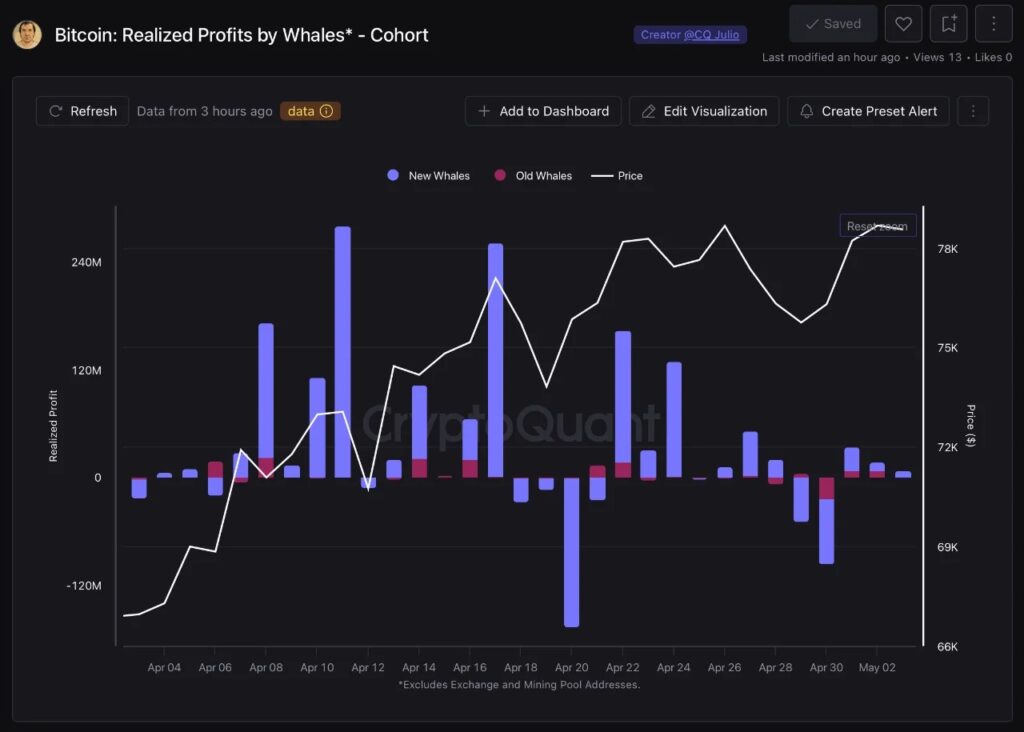
Bitcoin is holding above $80,000 as the market tests key resistance and participants debate whether the recovery from the March lows has the foundation for a sustained move higher. The price has recovered 17.5% over the past month — a meaningful move that has shifted sentiment from fearful to cautiously optimistic. But top analyst Carmelo […]

Australia’s banks urged to upgrade cybersecurity as AI threats evolve fast, with APRA flagging gaps in current safeguards and rising systemic risk. The post Cybersecurity strains grow as AI challenges Australian banks appeared first on CoinGeek.
Continued Iranian aggression despite the ceasefire raises concerns about regional stability and potential airspace restrictions, impacting markets. The post Iran continues attacks despite ceasefire, UAE reports over 500 missile strikes appeared first on Crypto Briefing.
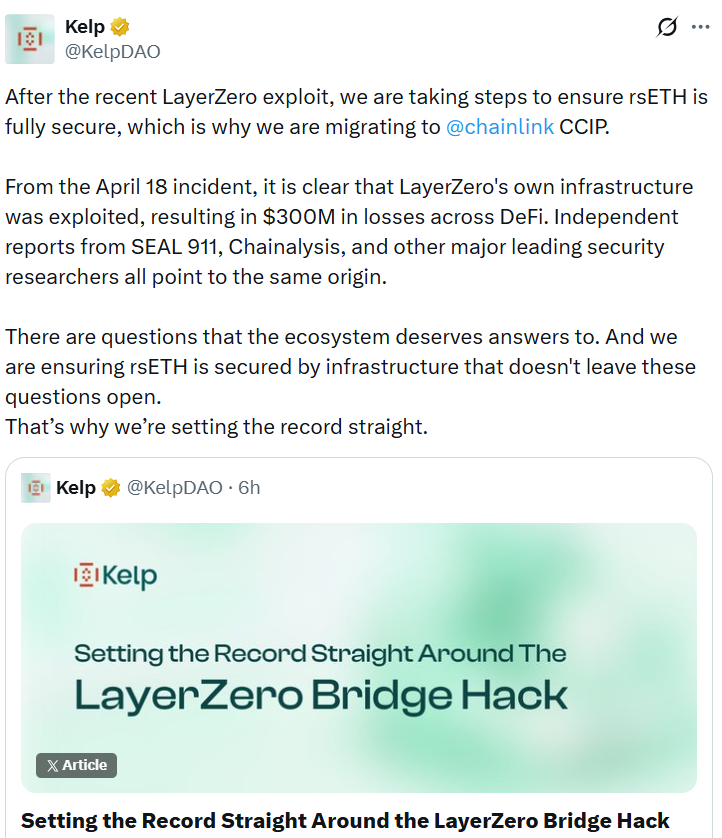
DeFi protocol Kelp DAO said it will be migrating its restaking token, rsETH, to the Chainlink oracle platform after the $292 million exploit in April, as it continued to blame the attack on LayerZero’s cross-chain infrastructure.Hackers stole 116,500 Kelp DAO restaked ETH tokens on April 18 from Kelp DAO’s LayerZero-powered bridge, then used them as collateral on Aave v3 to borrow wrapped Ether.“After the recent LayerZero exploit, we are taking steps to ensure rsETH is fully secure, which is why we are migrating to Chainlink CCIP,” Kelp DAO said in an X post on Tuesday.Source: Kelp DAOThe Kelp DAO hack has been one of the year’s largest security incidents, causing broader ecosystem contagion and impacting the interconnected crypto lending market. At the center of the exploit has been an argument over who was responsible for the vulnerability. Kelp says it wasn’t warned of the security risksA day after the exploit, LayerZero released a postmortem arguing the hack occurred because of an inadequate setup tied to Kelp’s decentralized verifier network (DVN), which relied on a single LayerZero DVN as the only verified path rather than requiring multiple independent checks to validate cross-chain transactions. LayerZero said it advised against this setup.However, Kelp DAO said Tuesday the 1-1 setup is the default and is used by many other protocols, citing data from analytics platform Dune that found roughly half of LayerZero users have a single DVN. It also accused LayerZero of approving the setup and failing to warn about the related security risk.“Kelp has operated on LayerZero infrastructure since January 2024 and has maintained an open communication channel with the LayerZero team throughout. The question of DVN configuration came up multiple times and these configurations were confirmed as secure at that time,” Kelp DAO added.Following the hack, LayerZero announced it will no longer validate or approve cross-chain messages for any app that relies on a single verifier, and that it is in the process of migrating protocols using the setup to a multi-DVN. LayerZero CEO says many of the claims are untrueBryan Pellegrino, co-founder and CEO of LayerZero, said in a reply on X that a “ton” of Kelp’s claims were “just completely untrue.”Related: US law firm attempts to block transfer of frozen ETH from Kelp exploitHe argued that Kelp originally used the defaults, which were multi-DVN, and later manually changed to a 1/1 configuration, which isn’t recommended for production applications.“The defaults Kelp is referencing in their screenshot were multiDVN or DeadDVN, which force-rejects an application using the defaults at all and requires them to manually set configuration. rsETH was originally configured to use the default LayerZero configuration of a multiDVN setup of LayerZero Labs + Google,” he added.Source: Bryan PellegrinoPellegrino also said a complete postmortem by external security firms would be published soon. North Korea-linked hackers are suspected of being behind the attack on Kelp and the April 1 exploit of decentralized exchange Drift, which totaled $285 million. Magazine: Bitcoiners eye ‘sell in May,’ SBF’s bid for new trial shut down: Hodler’s Digest, April 26 – May 2Cointelegraph is committed to independent, transparent journalism. This news article is produced in accordance with Cointelegraph’s Editorial Policy and aims to provide accurate and timely information. Readers are encouraged to verify information independently.