
Increased tensions in the Strait of Hormuz could lead to heightened military presence and potential disruptions in global shipping and air travel. The post Iran launches drones at ships in Strait of Hormuz, intercepted by US forces appeared first on Crypto Briefing.

TL;DR Sui reportedly handled around $65 billion in stablecoin transfers in a five-day stretch after its gasless stablecoin update. The update reduces friction by allowing supported stablecoin transfers without requiring users to hold SUI for gas. The headline number is large, but zero-fee systems can attract bots, arbitrage loops, and repeated high-velocity transfers. The market […]
TL;DR SIREN reportedly fell more than 95% after a whale sold roughly 670 million tokens. Lookonchain tracked about $64.8 million USDT in proceeds from the selloff. The address reportedly controlled more than 90% of circulating supply before the liquidation. The story is a warning about meme coin liquidity and supply concentration, not a verdict on […]

Gate added RLUSD trading pairs with XRP, BTC, ETH, and USDT, extending exchange access for Ripple’s dollar-backed stablecoin. Ripple said the XRP/RLUSD market unlocks interoperability and capital efficiency for digital asset markets worldwide. RLUSD Markets Open With XRP, BTC, ETH, and USDT Pairs Gate listed RLUSD on June 15, opening BTC/RLUSD, ETH/RLUSD, XRP/RLUSD, and RLUSD/ […]
Luca Zidane’s World Cup debut for Algeria highlights the evolving dynamics of national identity in sports and the enduring impact of legacy. The post Luca Zidane debuts for Algeria at World Cup, following father Zinedine’s legacy appeared first on Crypto Briefing.
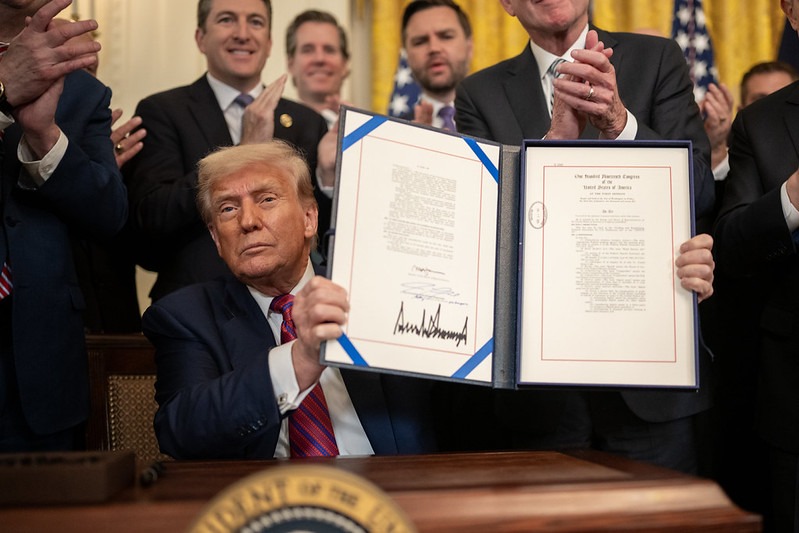
A bipartisan group of US senators led by Republican Senator Cynthia Lummis has urged the Treasury to ensure that state authorities are given the ability to regulate stablecoin issuers as the department considers how to implement the GENIUS Act.In a letter to Treasury Secretary Scott Bessent on Tuesday, the lawmakers said it was critical that the Treasury implement a section of the law giving a pathway for certain issuers to be regulated by the states “in a manner that preserves and promotes State participation.”The GENIUS Act allows issuers that have a stablecoin with a market value of $10 billion or less to be regulated by a state authority if that state has laws largely similar to the bill.Currently, that would mean all stablecoins but three, Tether (USDt), USDC (USDC) and USDS (USDS), formerly Dai (DAI), could be regulated by the states, as all have a market value above $10 billion, according to CoinGecko.In April, the Treasury sought public input for how it plans to implement the GENIUS Act at the state level, rules that President Donald Trump signed into law in July that regulate stablecoins and their issuers.President Donald Trump signing the GENIUS Act in July 2025. Source: The White House“Congress clearly sought to preserve the dual banking system and the crucial role of State banking agencies in supervising this market,” the senators said in their letter.They added that the Treasury’s proposal “did not address the timeline and procedural requirements related to State certification.” They argued this created “uncertainty for States” and could be interpreted as the process being “a one-time window that effectively bars future certifications.”The lawmakers said that state legislatures vary, and a flexible certification framework was needed to ensure that states can participate when they have rules implementing the GENIUS Act.Related: Anchorage backs Treasury’s GENIUS AML rules, seeks secondary-market sanctions clarity“States must be able to develop and seek certification of stablecoin regulatory regimes as demand for these charters materializes and as legislative schedules permit,” the letter said. Republican Senators Bill Hagerty, Kevin Cramer and Pete Ricketts, along with Democratic Senators Kirsten Gillibrand, Angela Alsobrooks, and Catherine Cortez Masto, also signed the letter.Public comments on the Treasury’s proposal closed on June 2, and it will now draft a final rule for publication in the Federal Register.Magazine: Guide to the top and emerging global crypto hubs: Mid-2026

TL;DR Michael Saylor has outlined a “Digital Asset Stack” framework for Bitcoin and related capital-market products. He argues Bitcoin should remain pure digital capital rather than adopt protocol-level yield. The framework pushes yield generation into credit, structured products, and equity layers above BTC. This is Saylor’s view and a defense of the Strategy/MSTR model, not […]
Anthropic’s engagement with US officials highlights the critical need for robust AI safety measures to prevent misuse and ensure national security. The post Anthropic sends researcher to address US government AI safety concerns appeared first on Crypto Briefing.
The FTC’s scrutiny of Amazon and Google highlights a growing regulatory focus on transparency in digital advertising practices. The post Amazon faces potential FTC penalties over allegedly misleading advertising practices appeared first on Crypto Briefing.
SBF’s potential token launch post-prison could challenge regulatory frameworks, highlighting the crypto market’s susceptibility to personality-driven volatility. The post Sam Bankman-Fried reportedly plans to launch a new token after prison appeared first on Crypto Briefing.