Roman Storm Says Prosecutors Treat Tornado Cash Transactions as Crimes
Storm said the case has lasted 1,139 days and described a recent filing by federal prosecutors in New York.

Storm said the case has lasted 1,139 days and described a recent filing by federal prosecutors in New York.
The app includes personal AI, a wallet and market tools. It is currently limited to iOS and requires an invitation.

Stablecoin payments infrastructure provider Rain has filed an application to establish a national trust bank headquartered in New York, adding to a wave of crypto companies seeking bank charters over the last year. Rain said Monday it filed the application with the Office of the Comptroller of the Currency (OCC) to establish Rain National Trust Bank. If approved, the bank would be able to provide fiduciary custody of digital assets and US dollars for institutional clients, provide reserve management for permitted stablecoin issuers and issue and redeem dollar-backed stablecoins in accordance with the GENIUS Act. Former Square Financial Services chief financial officer Brandon Soto will serve as president and CEO of the proposed national trust bank, subject to OCC review. “The institutions building on Rain want the assets behind their programs held by a fiduciary that answers to a federal regulator,” Rain CEO and co-founder Farooq Malik said.Rain joins a growing number of crypto and payments companies seeking national trust bank charters. Payments infrastructure company Modern Treasury also announced Monday it had submitted an application seeking approval to offer digital asset custody and related fiat services.Community banks challenge OCC over crypto trust chartersHowever, the push has drawn opposition from community banks. On Friday, the Independent Community Bankers of America sued the OCC, alleging the regulator exceeded its authority by allowing non-depository trust banks to conduct extensive non-fiduciary activities. The lawsuit was filed in the US District Court for the District of Columbia against the OCC and Comptroller Jonathan Gould. The ICBA argued that the OCC’s National Bank Chartering final rule and an interpretive letter 1176, 2021, “perversely allow entities engaged in highly risky cryptocurrency and digital assets activities to enter the banking system under lightly regulated national charters rather than the more rigorously regulated traditional bank charter.”Related: Bastion wins conditional OCC approval for national trust bank charterICBA said the framework gives crypto trust banks a competitive advantage by allowing them to offer services that overlap with community banks without facing the same regulatory obligations. It also alleged consumers could mistake the “national bank” designation for assurance that their assets are federally insured. The group has asked the court to overturn OCC’s March 2026 chartering rule and 2021 interpretive letter, and prevent further charter approvals relying on them. On Monday, Crypto Council for Innovation said the lawsuit was an attempt to stifle innovation. According to the ICBA’s complaint, the OCC has approved or conditionally approved at least 21 trust banks, with at least 13 of them being crypto companies. Magazine: Stablecoins can drain from banks and nations at lightning speed

CNBC contributor Jeff Kilburg is buying Fortinet and Cloudflare for the fourth quarter, though both trade above analyst targets. By his count, only Arista, his third pick, sits roughly 20% below its target. The KKM Financial founder pitched the trio on CNBC’s The Exchange as a way to profit from AI spending. He also conceded […]

Crypto exchange OKX has launched OKX Money, a stablecoin savings and payments app, in parts of Latin America, Africa, South Asia and the Middle East, that will pay some customers as much as 10% yield.The app allows users to fund accounts using more than 50 supported currencies, with deposits converted into dollar-backed stablecoins, according to an announcement shared with Cointelegraph.Users can hold USDG, USDC or USDT, send funds and spend with virtual or physical cards. Qualifying customers can earn an annual percentage yield (APY) of up to 10% on eligible USDG balances without staking or a lockup.A spokesperson for the exchange told Cointelegraph that the rollout is happening market by market, in line with local requirements, with the relevant legal entity and regulatory framework varying by jurisdiction. OKX did not disclose its specific initial launch markets.Related: OKX, NYSE parent file to launch tokenized US stock platformThe exchange joined Paxos’s Global Dollar Network in July 2025, giving its users access to USDG for trading and transfers. Stablecoins are increasingly being used outside crypto trading. Cross-border stablecoin flows rose 77.5% to $220.3 billion in the 12 months ending June 2026, according to Chainalysis, which cited trade, remittances and savings as use cases.OKX leaves source of 10% yield undisclosed“Customers can qualify for a higher tier by meeting a 30-day average deposit threshold, exceeding a 30-day spending amount or achieving a higher Exchange VIP status,” the spokesperson said.The spokesperson said rates and eligibility vary by region and customer and declined to comment when asked how the yield is funded.Earlier stablecoin yield products included Anchor Protocol, which offered returns of up to 20% on TerraUSD (UST), an algorithmic stablecoin whose dollar peg depended on conversion into the linked LUNA token. UST lost its peg in May 2022, and both tokens subsequently collapsed.By contrast, USDG, USDC and USDT are fully backed by asset reserves, according to their issuers. Some of the latest stablecoin reward programs share reserve income or offer exchange-funded loyalty rewards. Paxos’s Global Dollar Network distributes earnings from USDG reserves to partners. Those reserves include US Treasury bills, money market funds and cash.The US GENIUS Act includes a ban on payment stablecoin issuers paying interest or yield, while banking groups have pushed for restrictions on exchange-paid rewards. In the European Union, the Markets in Crypto Assets Regulation prohibits issuers and crypto service providers from granting interest on single-currency stablecoins.Magazine: China warns foreign spies about crypto, Singapore dominates Asia: Asia Express

The lack of insurance for catastrophic AI risks could lead to significant financial exposure for AI firms and influence regulatory actions. The post OpenAI, Google, Meta, Anthropic lack insurance against catastrophic AI risk appeared first on Crypto Briefing.
The probability fell 10% in 24 hours. A separate contract put the chance of Bitcoin reaching $87,500 at 77%.
Amid a wave of selling pressure across the crypto market, LIT’s price has plummeted by 62.56% in just one hour. Currently trading at $0.136472, this sharp decline follows a recent high of $0.36976. The sudden drop raises concerns among traders about the sustainability of price levels as trading volume remains relatively low. The Key Development […]
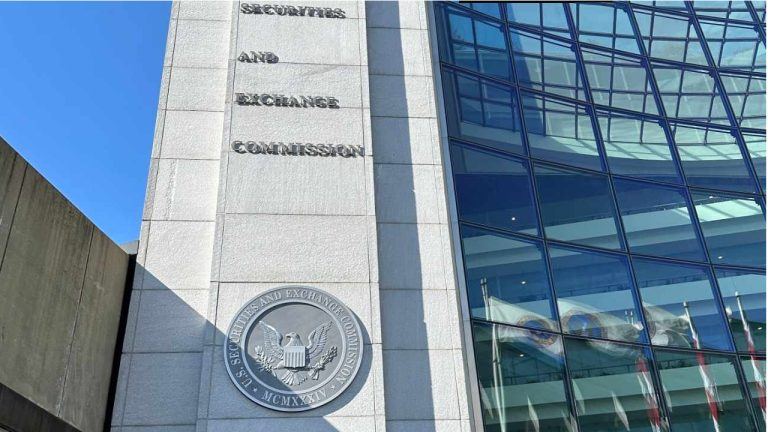
Investors face rising scams built on personal trust and borrowed authority as regulators across six continents participate in World Investor Week. The SEC’s new warning highlights relationship investment fraud and impersonation, including increasingly convincing artificial intelligence (AI)-assisted deception. A Global Campaign Puts Investor Trust Under Scrutiny Someone posing as a friend, financial professional, or regulator […]
Market spot-trading volume remains low, with no clear sign of spot buying.