Michael Saylor’s recent tweet stirred interest in the cryptocurrency market, stating, ‘The dots aren’t done.’ This comment suggests potential ongoing changes within the sector, which traders are eagerly monitoring for implications on altcoin performance. The tweet can be viewed here. As traders assess market dynamics, the anticipation around emerging trends is palpable. The Latest The […]
Li Ming’s bail highlights the complexities of enforcing export controls and the challenges faced by trading hubs like Singapore in such cases. The post Li Ming, alleged key figure in Nvidia chip smuggling network, is out on bail appeared first on Crypto Briefing.
Anthropic’s recent IPO on Solana generated a remarkable $134.7 million in trading volume within the first 24 hours, signaling strong market interest in tokenized assets. This development follows the Breakpoint event, which highlighted the growing ecosystem on Solana. As the tokenization trend expands, it may attract further investments into the platform. The Key Development Solana’s […]

During Sunday’s move above $61,000, Binance perpetuals posted nearly ten times as much net buying as the exchange’s spot market. Read the full story on CryptoSlate Understand the crypto stories that matter and what to watch next. Get The Catalyst in your inbox
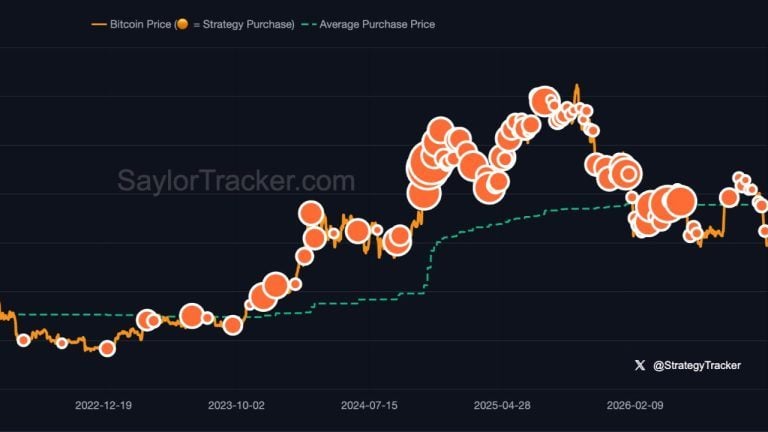
Michael Saylor revived speculation about another Strategy bitcoin purchase as the company’s holdings remained below their acquisition cost. Bitcoin traded near $60,000 after recovering from a sharper sell-off, while the latest disclosed purchase left Strategy holding 850,849 BTC. Saylor Shares Another Bitcoin Purchase Chart Michael Saylor, founder and executive chairman of Strategy Inc. (Nasdaq: MSTR), […]
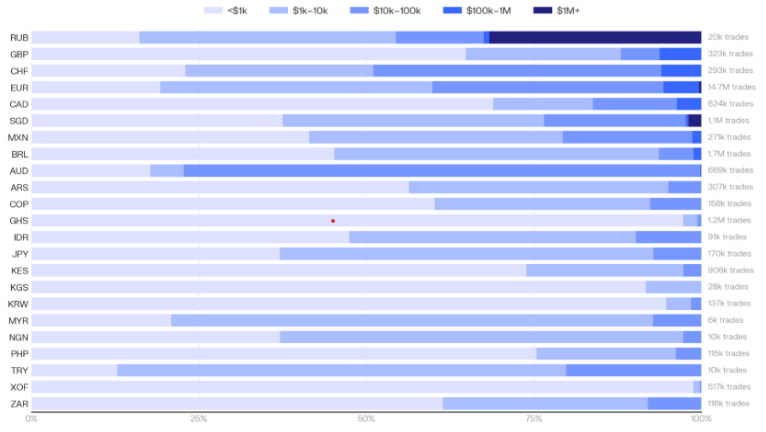
Opinion by Michael Egorov, founder of Curve Finance and Yield BasisFor a long time, the obvious way to think about onchain foreign exchange (FX) was to start at the top. Banks tokenize currencies, large financial institutions move their FX activity onchain and institutional liquidity naturally follows.The end result? Blockchain-based FX eventually grows large enough to resemble its traditional counterpart. But that’s not necessarily how it is going to happen.In fact, there are growing signs that onchain FX will develop in the exact opposite way — from the bottom up.Stablecoins like Brazilian Digital (BRZ) or Monerium’s EURe can be quickly redeemed onchain and easily moved from digital wallets to bank accounts. They generate healthy trading activity as decentralized finance (DeFi) users swap them in decentralized exchange (DEX) pools.Markets like this end up developing in real time around a practical user need, which is moving directly between digital currencies and fiat.This is still just an early-stage example, but the use case and demand are real enough. Keyrock data shows that the majority of onchain stablecoin trades tied to emerging market currencies fall in the $1,000 to $10,000 range — modest amounts compared to institutional scale — but that’s precisely the point.It shows how the market is building in the general direction of onchain FX to meet practical payment needs, not just large traders.‘Small’ is not the same as ‘useless’People and businesses need to move their money between currencies, and clearly, they are not content to wait for major traditional finance (TradFi) institutions to move their FX operations onto blockchain rails.Related: Paraguay bank collapse shows stablecoins can offer a lifeline… of sortsThere’s a pretty common assumption about onchain FX in that a market needs huge liquidity before it can become really useful. In practice, though, that’s not entirely true.If there is genuine demand from someone who needs to exchange dollars into euros, Swiss francs or another currency, even a smaller pool can process those transactions and serve a real economic purpose.Stablecoin DEX Trade Volume. Source: Keyrock ResearchOnchain FX doesn’t need to become big before it becomes useful; instead, it can grow precisely because people are actually using it.As a matter of fact, this is more or less what happened with stablecoins. They began as a relatively niche crypto-native use case, and yet today we already know them to be part of a much broader financial infrastructure.Chainalysis recently shared data that shows cross-border stablecoin activity jumped to over $220 billion by mid-2026. That’s an almost 80% growth over the course of one year, proving that demand and activity are constantly on the rise. There is no reason onchain FX can’t follow a similar path.The user does not care how big the market isThis is actually the most practical side of this issue. Onchain FX obviously won’t be able to compete with the entire global foreign exchange market anytime soon; that’s still years away. But the more interesting question is what problems it can solve for someone who already has money onchain.Today, you can exchange a USD stablecoin into a EUR stablecoin (or some other alternative) onchain and use that money for payments with relatively little trouble. In fact, doing it this way is often faster and cheaper than going with a classic international bank transfer.Related: Circle’s ARC token sale lifts earnings as lower yields weigh on USDC incomeThe same logic applies to onchain FX. A fintech or crypto-card company does not need to recreate the entire institutional market; what they need is to move their customers’ funds efficiently between currencies.When someone is trying to pay in a different currency, converting it can add costs to the operation, since it usually involves Visa or Mastercard, which charge around 1% in processing fees.Onchain exchanges are a much better option here. If user funds are already living on blockchain rails, swapping USD stablecoins into EUR stablecoins can be done directly, without going through any extra intermediaries, which is both faster and less costly.Banks will most likely remain important entry and exit points where digital money needs to interact with the real world. Issuing and redeeming local currencies, accessing bank accounts, dealing with compliance and such is where banks will take the lead.But when the money is actually onchain, many of the traditional “in-between” steps can be dropped for greater efficiency.From the perspective of a user who just wants to conduct a financial transfer with minimal complications, that’s a highly positive improvement. How big or small the overall market matters little in this case.Demand is only half the problemThere is, of course, a catch.Real demand is crucial, but it does not magically solve the problem of liquidity. The challenge is not simply to create a EUR/USD or CHF/USD pool; it’s to make them economically sustainable.This is where automated market makers can make a difference. Traditional market-making firms may not find it attractive to provide liquidity for a small FX market; there may simply not be enough volume to justify the operational costs.Cross-border stablecoin flows. Source: ChainalysysAutomated liquidity changes that equation because software can provide liquidity continuously without requiring a market-making firm to manually manage every trade.Imagine two dollar stablecoins, USDC (USDC) and Tether (USDT). From the perspective of a traditional exchange, moving from one dollar stablecoin into another might look like a fairly boring business. Both assets are supposed to be worth roughly $1, so there isn’t much price movement to trade around.But if there is still a real need for people to switch between stablecoins like that, an automated market maker can create a pool where users can make that swap directly. Each trade generates a small fee for the liquidity providers, and when enough people need the same conversion, a market can exist even when it doesn’t look particularly exciting to a traditional market maker.This kind of adoption cannot exactly be called explosive, true, but there’s also nothing wrong with slow, natural growth. Sometimes, new markets just need a small group of people who have a problem the existing infrastructure does not solve particularly well. If those users can make the market economically viable, liquidity can grow from there.About the author: Michael Egorov is the founder of Curve Finance and Yield Basis. He is also a physicist, entrepreneur and crypto maximalist. Michael transitioned from the scientific field to the crypto industry and holds a bronze medal from the International Physics Olympiad and a PhD in ultracold atoms.Magazine: Can decentralized phone networks power the AI revolution?
Tesla’s FSD v15 update, with enhanced visualization and safety, could accelerate autonomous driving adoption, impacting transportation norms. The post Tesla rolls out Full Self-Driving v15 with a redesigned Reality View appeared first on Crypto Briefing.

The Dogecoin price just fell to its lowest level since June 2022. But according to several analysts, DOGE has landed right on the kind of support that has launched its biggest rallies of the past four years. DOGE briefly dropped to around $0.05 on Saturday as the crypto market crash sent Bitcoin below $56,000. The […]
Persistent inflation may lead to tighter monetary policy, impacting economic growth and market stability as rate hike expectations rise. The post Fed may need multiple rate hikes to tackle persistent inflation appeared first on Crypto Briefing.

The sharp reversal followed approximately $2.7 billion in crypto liquidations within 24 hours, while Bitcoin’s weekly chart identifies the $59,968 demand zone as a critical level for its next major move. The November 22 rebound recovered more than $5,500 within hours, highlighting the volatility surrounding the current correction. However, the recovery has yet to establish […]