



The pitch for European infrastructure has rarely been louder, and Lili makes the case with the confidence of someone who has lived on both sides of it. Every major hyperscaler — AWS, Google Cloud, Azure, even Oracle — is a US company, and for a growing cohort of Web3 teams that is no longer a neutral fact. Cherry Servers sits under European jurisdiction, runs its own facility in Lithuania, and operates data centers across Sweden, the Netherlands, Germany, Chicago, Singapore and a newly opened site in Tokyo. Some of Cherry’s customers come for hard compliance reasons; others, Lili says, come for ideological ones, wanting the chains they help secure to live beyond the reach of any single government. The conversation lands at a moment when data sovereignty and distrust of concentrated American cloud power have moved from fringe concern to boardroom agenda.
The sharper argument is about economics, and here Lili thinks the industry is approaching an inflection point. She describes a shift from “cloud-first” to “workload-first” thinking: instead of defaulting to a hyperscaler and accepting whatever T-shirt-sized instance you’re sold, teams running archival nodes, validators or other niche workloads are discovering they pay more and perform worse than they would on dedicated hardware tuned to the job. Cherry’s answer is granular customization — choose your disks, your storage, your RAM, and pay only for what the workload demands — backed by account managers who architect the build rather than just sell a box, with human support that answers in well under a minute. For staking-heavy customers, the model is almost self-funding: a large share pay in crypto, drawing on staking rewards to cover their infrastructure across some thirty different chains.
Her forecast for the next eighteen to twenty-four months is the part worth sitting with. Lili argues the era of free cloud credits is ending — she doubts AWS will keep handing startups six-figure credit grants for signing up to an accelerator — and that founders, newly disciplined about runway, will increasingly treat optimized bare metal as a way to extend it. In the closing hot-take round she plants her flag as a multi-chain “Solana maxi,” names Bitcoin as the enduring store of value while backing the smaller chains’ upside, and offers a builder’s creed: the market ultimately rewards people who make useful things on-chain, not those treating tokens purely as speculation — which, she adds, is also why she thinks people should run nodes with smaller providers. The desert-island sci-fi pick, naturally, is Star Wars.
If you enjoyed the show please subscribe to the Crypto Conversation and give us a 5-star rating and a positive review in whatever podcast app you are using.






The shortened AI review period may accelerate AI innovation but raises concerns about insufficient oversight on cybersecurity and national security risks. The post Trump’s AI
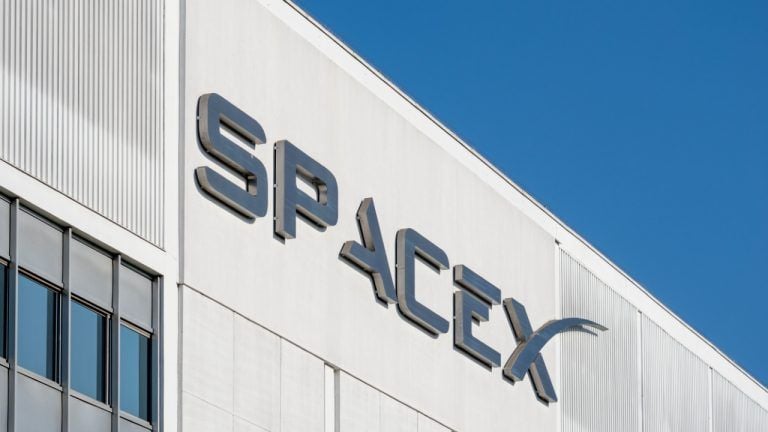
Cathie Wood’s ARK Invest moved quickly into SpaceX after Elon Musk’s space company began trading, buying nearly 3.3 million shares for three exchange-traded funds (ETFs).
The proposed US-Iran reconstruction plan could reshape regional geopolitics, influence global oil markets, and alter investment landscapes. The post The Israel Project publishes US-Iran memorandum
The best crypto trading signals Telegram groups to join are CryptoNinjas Trading, Evening Trader, Binance Killers, Dash 2 Trade, Crypto Inner Circle, Learn2Trade, Wallstreet Queen