


The U.S. Senate has put the Digital Asset Market Clarity Act on course for a 60-vote procedural test on Sept. 15.
The bill is intended to create a broader federal framework for digital asset markets.
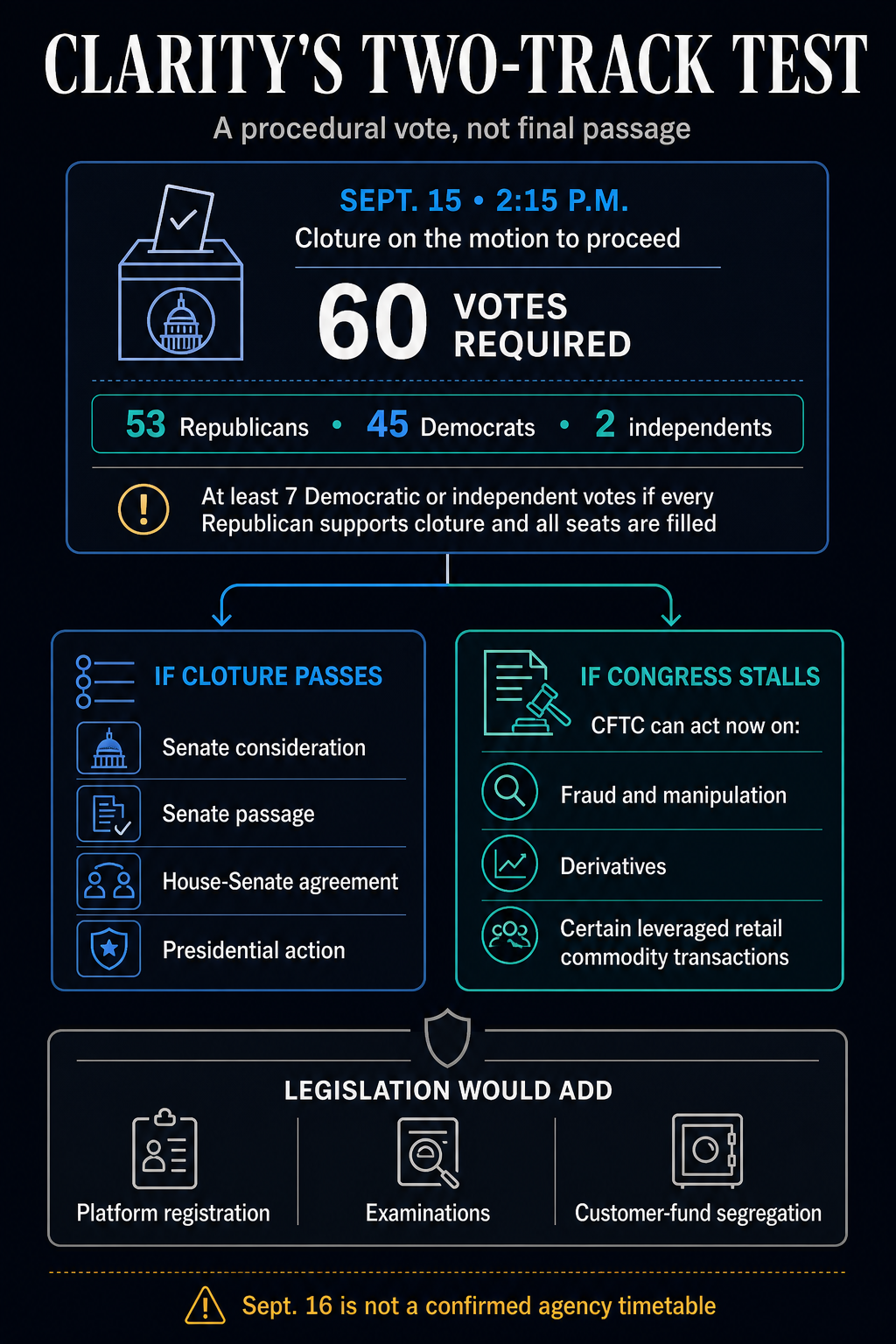
Under the official floor schedule, cloture on the motion to proceed to H.R. 3633 is scheduled to ripen at 2:15 p.m. A successful vote would move the Senate toward considering the bill. It would not pass the legislation.
Senate rules require three-fifths of senators duly chosen and sworn to invoke cloture on a legislative motion, which means 60 votes in a fully seated chamber. The Senate has 53 Republicans, 45 Democrats and two independents. If every Republican supports cloture and all seats are filled, backers would still need at least seven votes from Democrats or independents.
The bill advanced from the Senate Banking Committee in a bipartisan 15-9 vote in May, but that tally does not establish its floor support. Seven Democratic senators, Angela Alsobrooks, Cory Booker, Catherine Cortez Masto, Ruben Gallego, John Hickenlooper, Mark Warner and Raphael Warnock, said in July that the current text fell short on ethics, consumer protection, illicit finance, conflicts of interest and market integrity.
Republican Sen. Jim Risch supports advancing it and described Sept. 15 as the start of the Senate process. A complete whip count has not been made public.
The unresolved vote has also sharpened the question of what regulators could do without Congress. CFTC Chair Michael Selig said Aug. 20 that the agency would begin taking crypto-market steps under existing authority if CLARITY continued to stall because of what he called Democratic obstruction.
Selig’s January agenda included joint work with the Securities and Exchange Commission on how crypto assets fit each regulator’s jurisdiction.
It also covered rules for tokenized collateral and leveraged retail transactions, pathways for perpetual derivatives, and possible exemptions or safe harbors. Those actions could shape parts of the market without a new law.
They would not reproduce the regime Congress is considering.
The CFTC can police fraud and manipulation in spot digital commodity markets. It can also regulate derivatives within its jurisdiction, including certain leveraged, margined or financed retail commodity transactions. Selig told senators that legislation would add a fuller framework for trading-platform registration, examinations and segregation of customer funds.
Coinbase CEO Brian Armstrong suggested regulators could unveil rules on Sept. 16, but neither Selig’s statement nor the agency’s published agenda confirms that date.
Before H.R. 3633 could become law, the Senate would still need to consider and pass it, resolve any differences with the House-approved version and send identical legislation to the president.
The post CLARITY gets a September Senate floor date as CFTC signals a limited regulatory fallback appeared first on CryptoSlate.






Eric Trump’s denial highlights the risks of misinformation in crypto markets, emphasizing the need for investors to rely on verified sources. The post Eric Trump
The surge in AI-related debt could strain the credit market, potentially elevating yields and limiting access for non-AI sectors. The post Blue-chip companies enlist junk
Iran’s stance may complicate international relations, reducing chances for diplomatic resolutions and affecting global economic stability. The post Iran to target assets of nations aiding
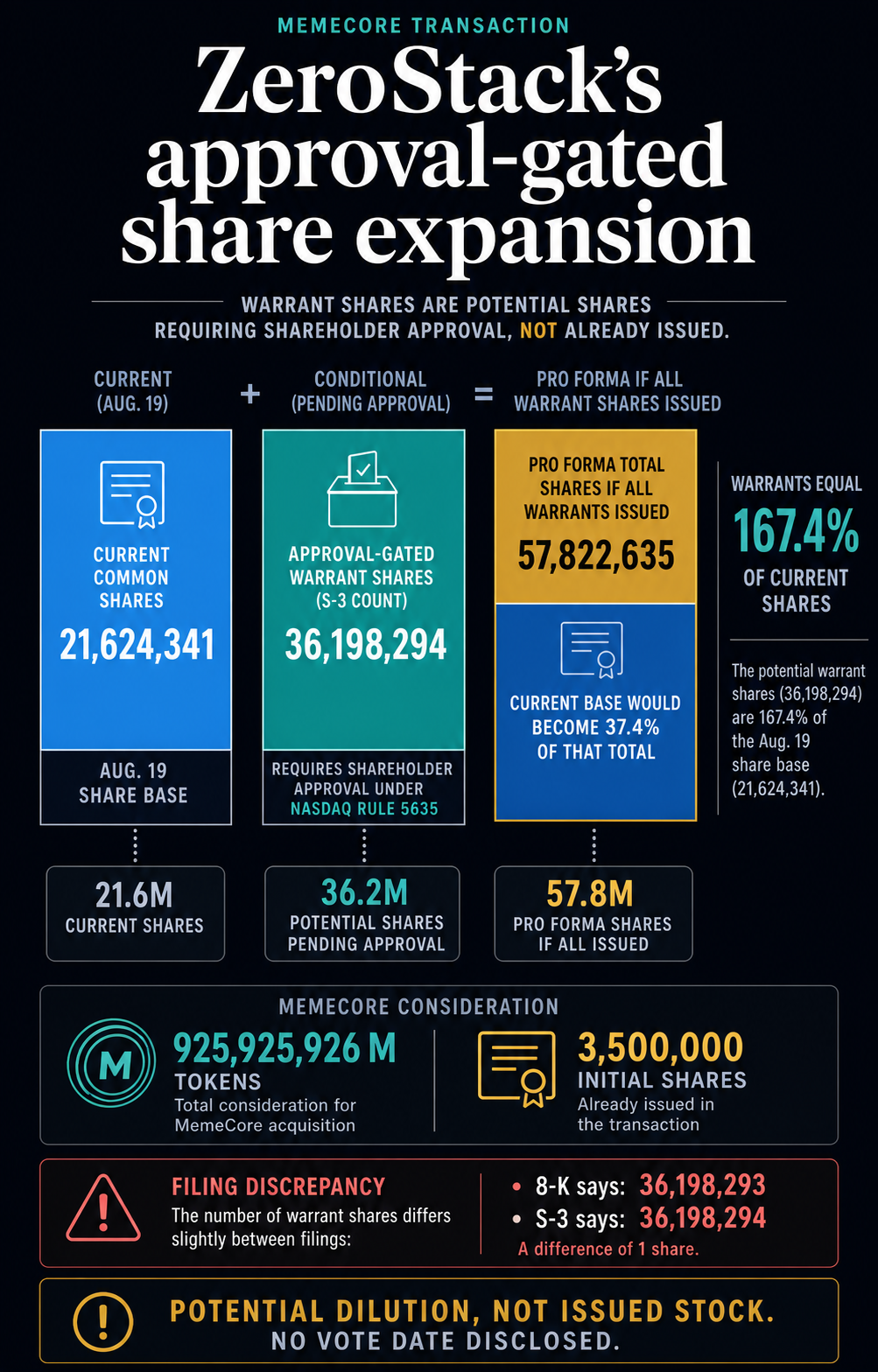
ZeroStack’s Aug. 21 resale registration puts a shareholder vote between the company and 36.2 million new shares tied to its MemeCore acquisition, a warrant block