
I have read a lot of “the bill isn’t dead yet” headlines after a failed Senate vote, and most of them are coping. This one is technically accurate and still not encouraging.
Tuesday’s vote was never a vote on the Clarity Act itself. It was cloture on the motion to proceed, which is the gate that decides whether the Senate is even allowed to debate the bill. That motion needed 60 votes and received only 49.
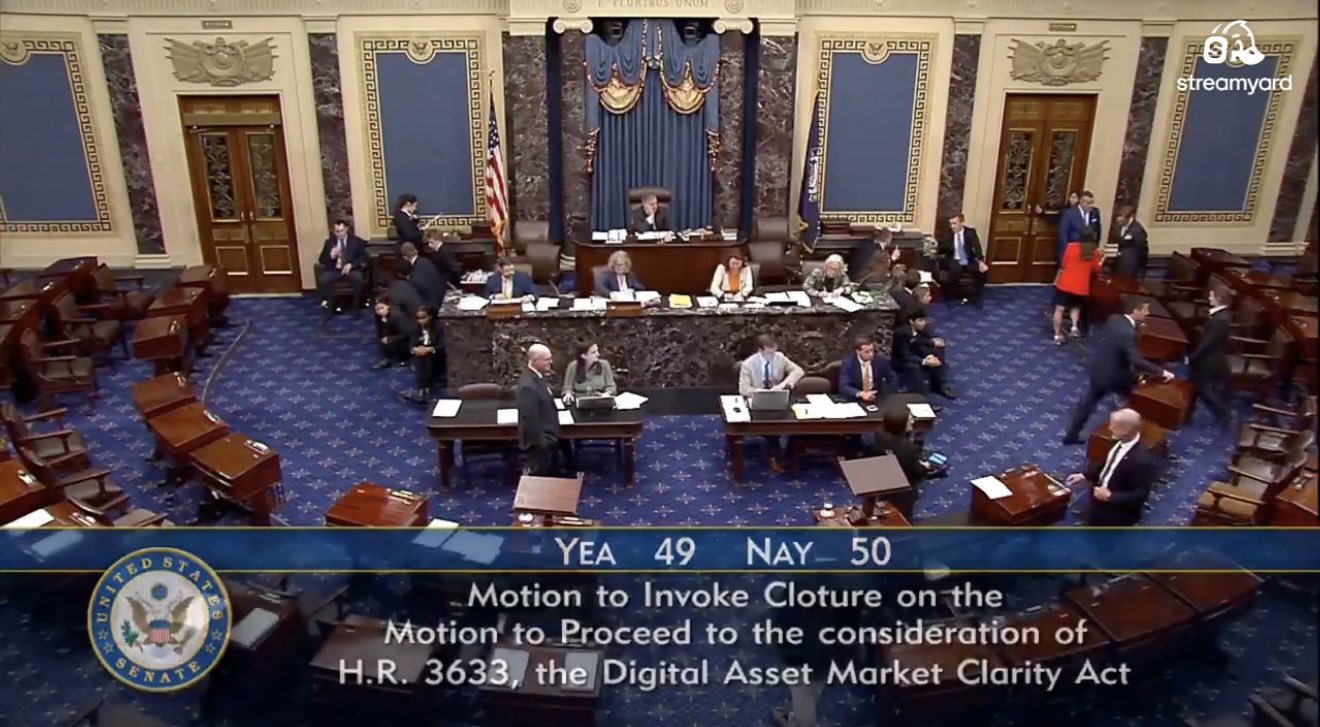
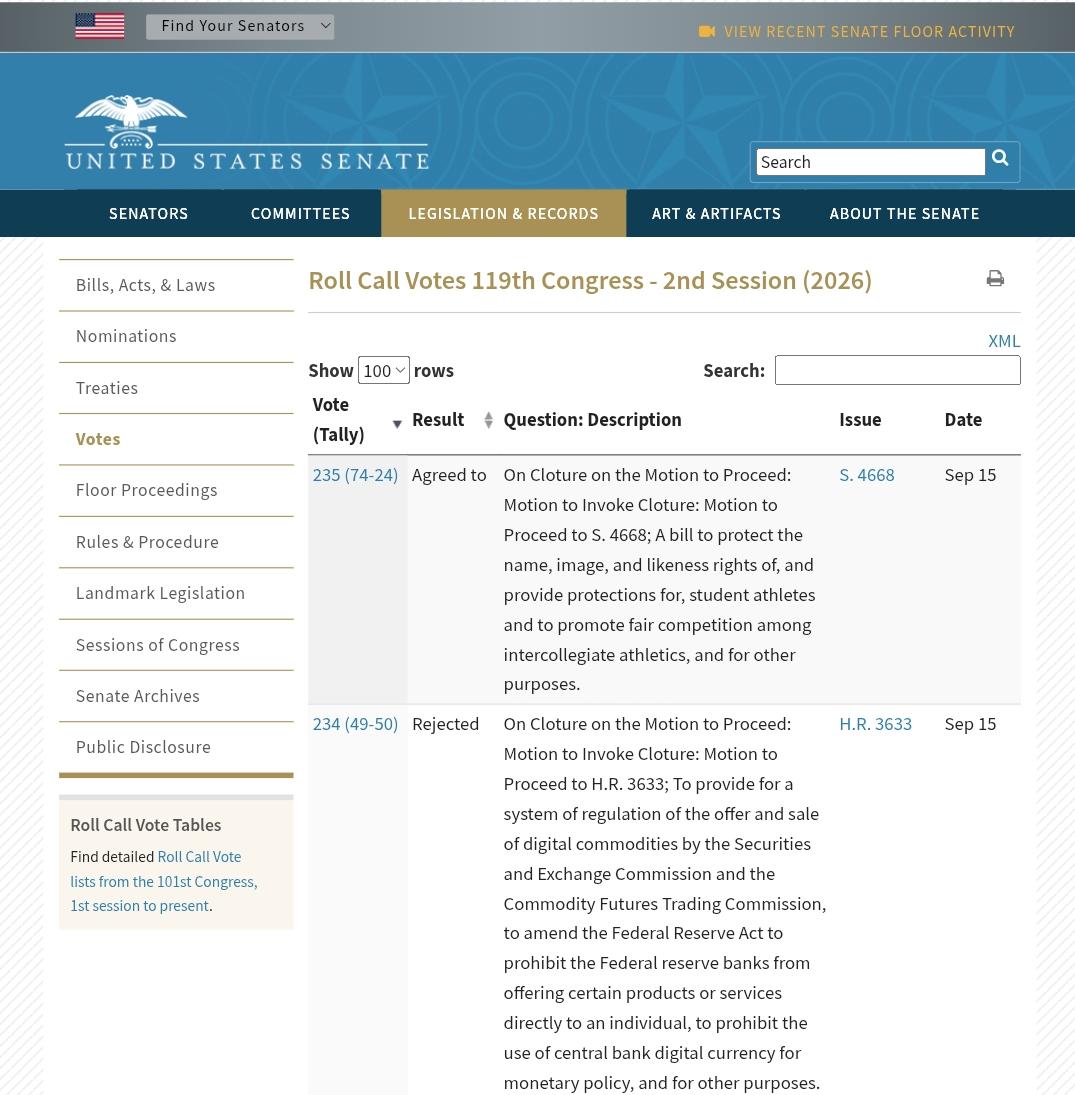
The official roll call for Vote 234 lists the result as rejected, 49–50. The Senate Daily Press adds the detail that Senator Coons did not vote and that Senators Collins, Hawley, Moran and Tillis voted no. The same log states that Tillis voted no in order to make a motion to reconsider.
That motion does not revive the bill on its own. Under Senate practice, a senator on the prevailing side can ask the chamber to look at the same question again. Because cloture failed, the prevailing side was the nays, which is why the job fell to Tillis rather than to a senator who had voted yes. The motion simply leaves the file open so the Majority Leader can call up a second cloture vote later if he thinks the count has changed.
The Senate’s tentative 2026 schedule is unforgiving. After this week the chamber has only scattered session days through late September and the first days of October. A state work period then runs from 5 October to 6 November. Election Day is 3 November, and the Senate is not scheduled back until after that break.
That is the entire remaining window before members leave to campaign. A second cloture vote could, in theory, be scheduled in those remaining September or early-October sitting days. Even if cloture somehow passed on a second try, the Senate would still need post-cloture debate time, a separate passage vote, reconciliation with the House text that passed in July 2025, and another House vote on the changes. There is not enough floor time left for all of that before the October recess.
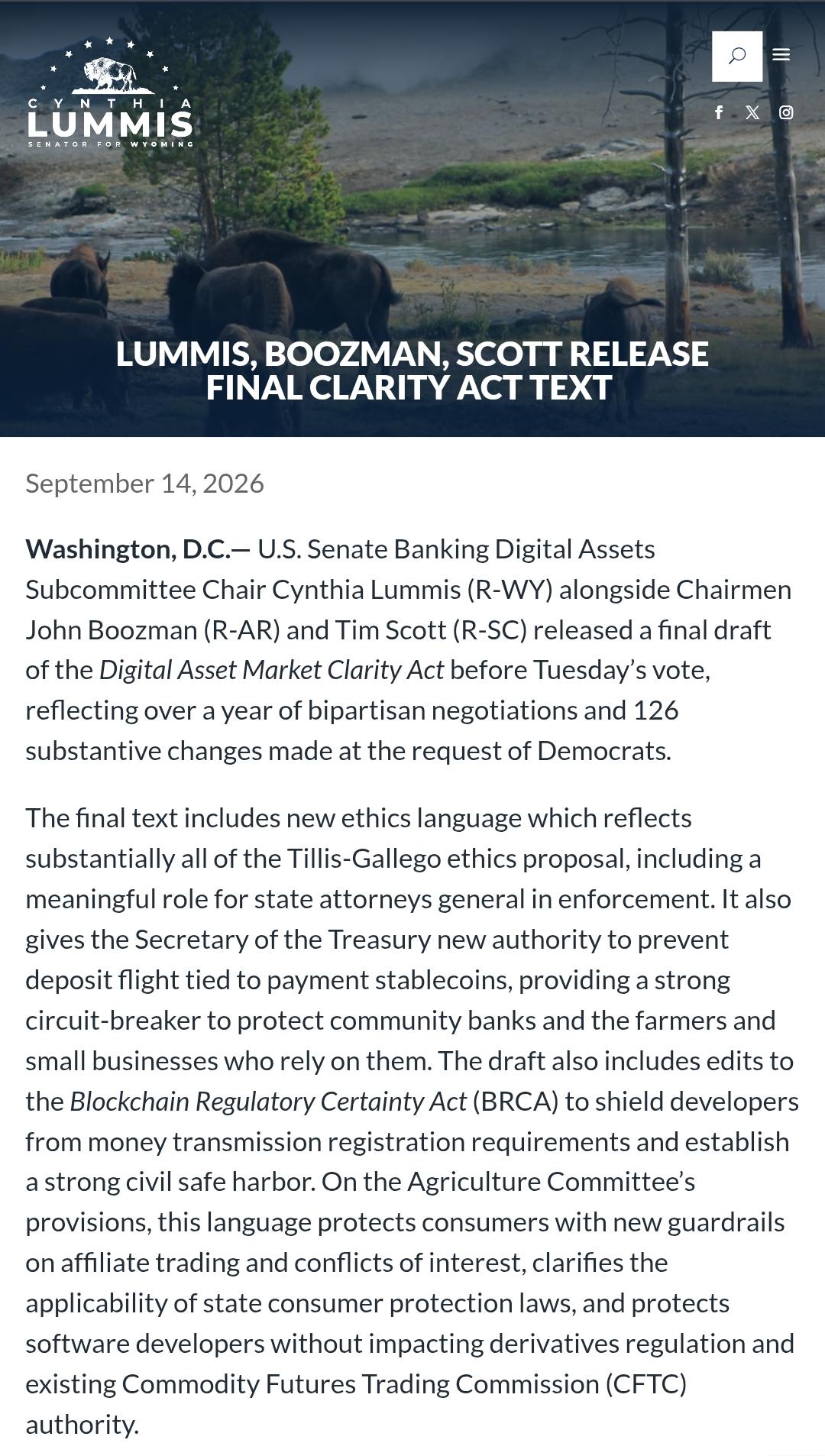
The problem is not only the calendar. It is the vote itself. Republicans hold 53 seats, so they needed every available Republican plus at least seven Democrats. They got none of those Democratic votes and lost four of their own. Two days before the roll call, Senators Lummis, Boozman and Scott released what they called final text and said it included more than 120 changes requested by Democrats, including ethics language and Treasury authority to address stablecoin deposit flight. That draft still did not produce 60 votes.
A motion to reconsider is a procedural lifeline, not a coalition. Leadership can bring the same question back only if the underlying politics change. There is no official record that the four Republican no votes or a bloc of Democrats are about to flip before the midterms.
After the October recess the incentives get worse, not better. Members are home. The next Congress begins in January 2027. Unfinished bills from this session do not carry over in any useful way, so the process would largely start again. That is why missing the pre-election window likely pushes a durable market-structure statute into the next Congress rather than the next month.
Agency rulemaking at the SEC and CFTC will continue either way. What failed on Tuesday was the chance to replace that patchwork with a statute that is harder to unwind when administrations change. The motion recorded in the Daily Press keeps a narrow door cracked. The official vote tally, the legislative calendar and the midterms all suggest that door is not going to be walked through in 2026.
Disclosure: This is not trading or investment advice. Always do your research before buying any cryptocurrency or investing in any services. Follow us on X @nulltxnews