

OpenAI has been named the winner of Justin Sun’s inaugural $1 million mathematics prize, yet the company has left the money sitting unclaimed, just as it did with an identical prize from the Clay Mathematics Institute weeks earlier.
The prize was to reward an AI-authored proof of the Navier-Stokes equations, a fluid dynamics problem mathematicians spent decades trying to crack. Two academics say the work drew on their own unpublished research, a claim OpenAI disputes.
OpenAI published its proof of the three-dimensional Navier-Stokes problem on September 8, saying 10,000 of its AI agents worked the problem for 88 hours before a separate model, GPT-6 Astra, spent another 17 hours checking the logic.
The Clay Mathematics Institute set the problem in 2000 as one of seven Millennium Prize Problems, each carrying a $1 million reward, and still lists it as active on its website.
OpenAI said at the time that it would not claim the Clay money. It became a bigger story once questions arose over whose work actually produced the proof.
Two mathematicians said their unpublished research had sat inside an OpenAI product, a claim the company denied.
“I do not know what their model did, or how. I do not know whether our data was used. I am not accusing anyone of anything,” said Tristan Buckmaster, professor at New York University.
Eight days after the dispute broke out, Justin Sun’s office announced its own answer to the same problem. They created the Justin Sun Prize, a bounty system built around machine-checkable proofs rather than traditional peer review.
Every entry on Sun’s list can pay out twice. Once for the person who proves a result and again for whoever formalizes it as code. Sun’s team named the OpenAI research team the winner of the prize’s first $1 million top award for the Navier-Stokes proof.
Navier-Stokes is the fifth entry. It is marked solved, credited to the OpenAI team, eligible to claim, but remains unclaimed.
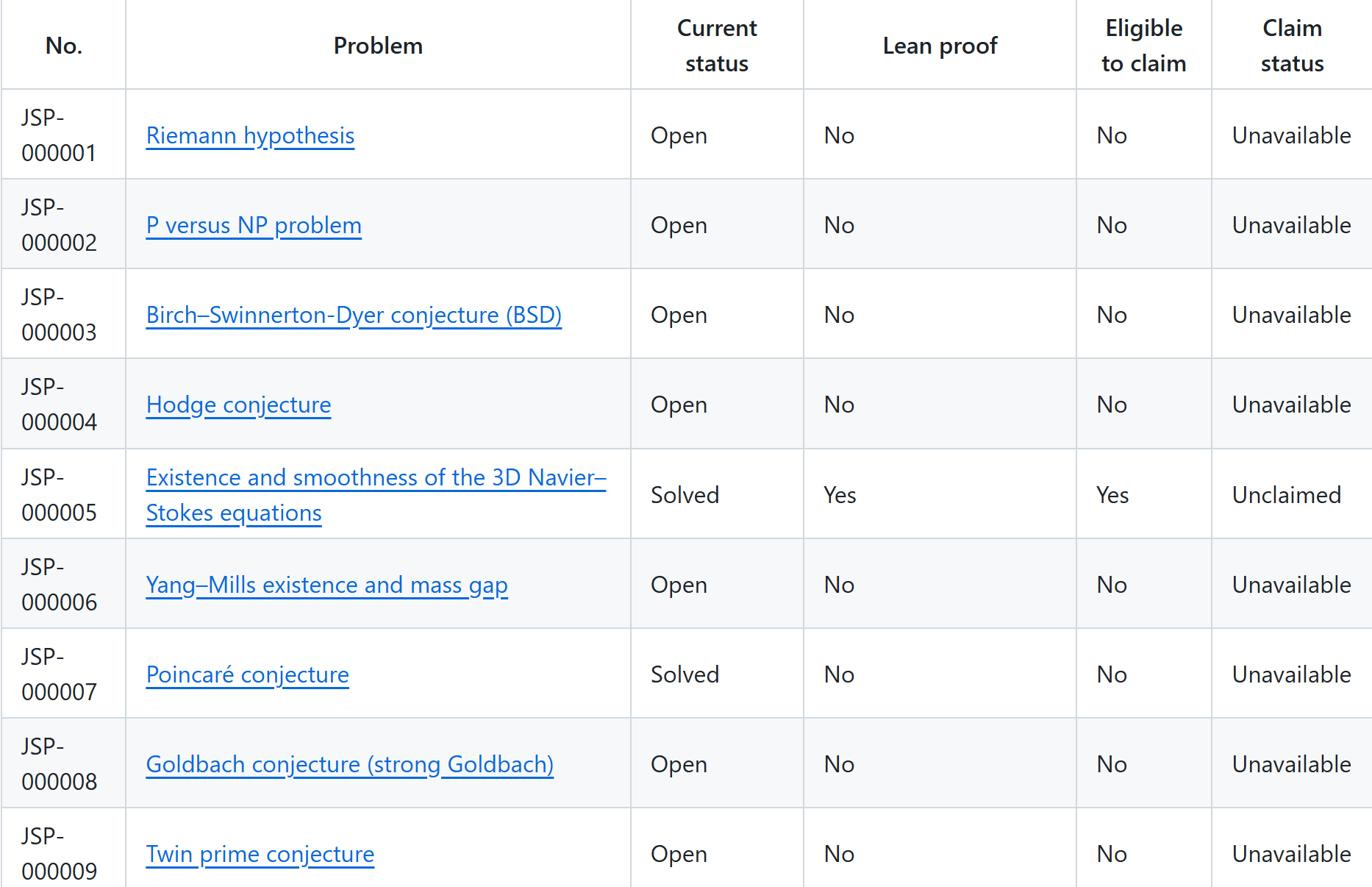
Under Sun’s rules, a problem already solved before it joins the list pays the person who translates it for the machine, not the person who proved it.
“I care only about the result, not whether the contributor is human or a machine,” Justin Sun said.
Sun’s own list carries a warning beside that entry. It says the OpenAI announcement is not peer review, and that acceptance by mathematicians has not been confirmed.
The post OpenAI Rejects Another Math Prize, This Time Justin Sun’s $1 Million appeared first on BeInCrypto.



Ethereum validators rely on independently built consensus clients to agree on the chain, and that diversity is a safety feature. If a defect affects a
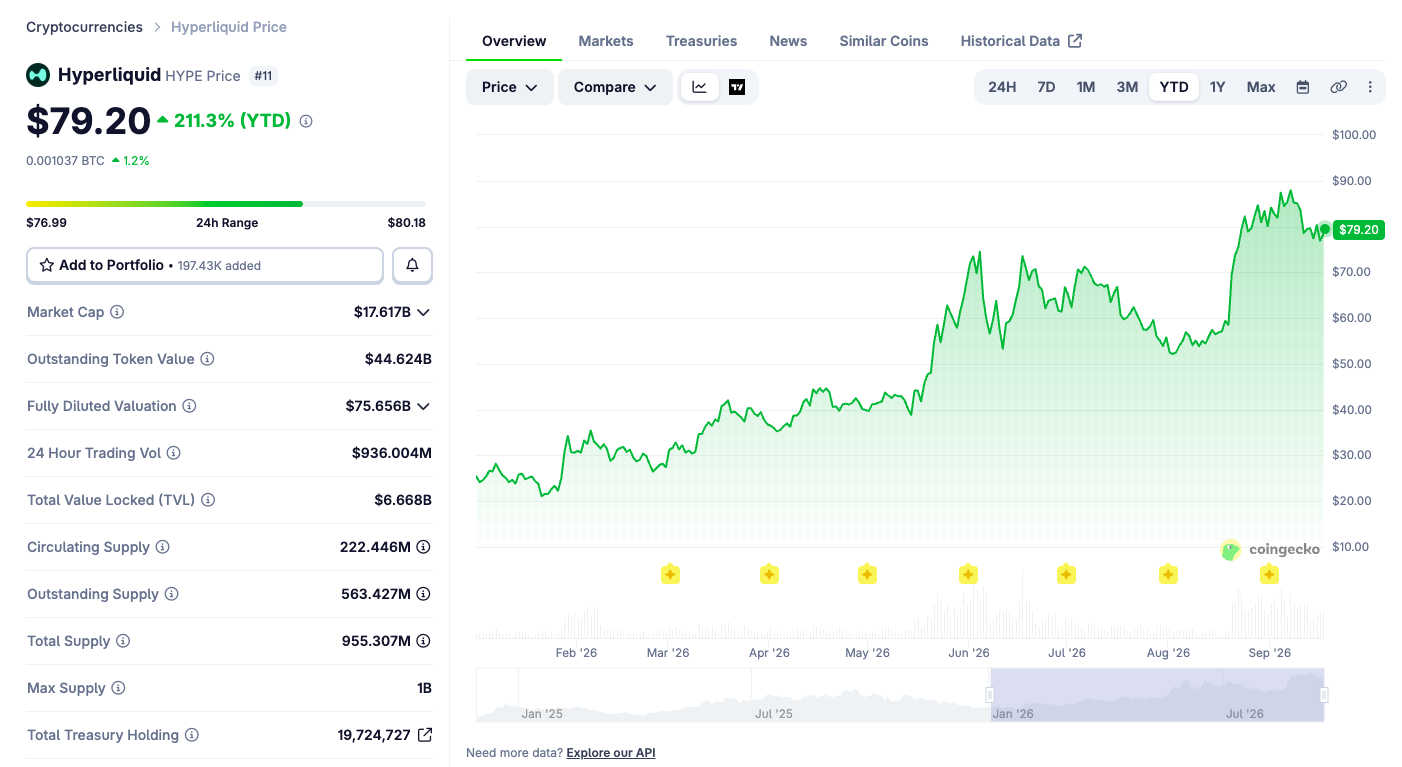
Payward, the parent company of Kraken, plans to deploy onchain perpetual futures for United States clients, starting with markets built on Hyperliquid’s HIP-3 framework, the
A notable transfer of 30,335 ETH, valued at approximately $73.7 million, has been reported moving from Coinone to an unknown wallet. This significant transaction surfaced

Seven Senate Democrats voted Nay on the Senate’s September 15 cloture vote on the Digital Asset Market Clarity (CLARITY) Act, according to the chamber’s official