Tether is taking its first steps to work with national financial infrastructures and has announced GEL₮ a lari-backed stablecoin which they will be launching soon.
This initiative, which is specifically designed for the domestic Georgian economy, but remains interoperable with global blockchain payments networks, was developed in collaboration with the government of Georgia.
The announcement positions Georgia as one of the few countries directly working with a prominent stablecoin issuer to launch a fiat-backed digital asset in an established regulatory environment. GEL₮ is designed to serve as a bridge between the traditional financial system and decentralized payment infrastructure, according to Tether’s official announcement.
Tether and the Government of Georgia to Launch GEL₮, the Official Stablecoin of Georgiahttps://t.co/ueSLlJzot1
— Tether (@tether) May 25, 2026
Instead of stablecoins that are just pegged to global value instruments broadly, GEL₮ serves the Georgian economy alone; it’s a digital version of the national currency, a financial asset which can transit between blockchain protocols. This development is consistent with a clear defensible strategic expansion pursued by Tether, the only substantial player in the global ecosystem for stablecoin.
Georgia is at the centre of this initiative due to its continually changing regulatory environment. The nation has acted purposefully to lay out a wide-ranging regulatory scheme for digital assets, with special focus on stablecoins. It tackles important matters, including reserve management, redemptions rights, issuer accountability and anti-money-laundering (AML) implications.
Instead of operating in a gray regulatory area, GEL₮ is being built under the rule of law. According to the authorities, this framework is in line with emerging global guidelines, including bills being proposed in the U.S., such as the GENIUS Act.
Such approach to regulation conveys a wider objective: establishing the status of Georgia as the jurisdiction for compliance and innovation in blockchain-based financial services. It would bring domestic regulation in line with global expectations, so the country can compete to attract institutional investors and fintech innovators looking for regulatory safety.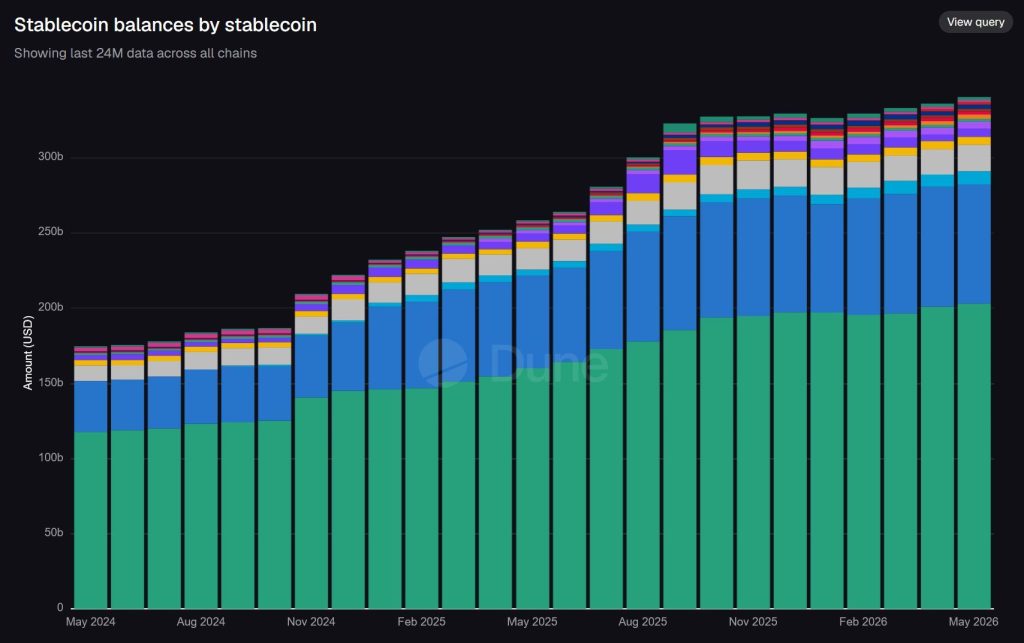
This focus on organisational oversight comes in the wake of rising regulation around stablecoins, where transparency and sufficient reserve backing are still key points for regulators to address.
The project has a few main use-cases: lower cost payments; near-instant settlement of payments; remittances and programmable financial services.
They are also commonly plagued by delays, excessive fees and multiple intermediaries in cross-border transactions. GEL₮ intends to use blockchain infrastructure for these processes by efficiently moving value at a lower cost and offering timely services.
Programmability introduces additional functionality. Enabling use cases such as conditional payments, escrow arrangements, and real-time payroll systems, Businesses and developers can embed automated payment logic.
Such capabilities are especially relevant for emerging markets and smaller economy countries where financial infrastructure is otherwise poorly developed. This local currency backed with globally accessible blockchain service could be a building block of GEL₮, replicable elsewhere.
GEL₮ will launch in an environment dominated by just a handful of stablecoin issuers. With an approximate USDT circulation of $200 billion Tether comprises ~59% share of the total stablecoin market.
USD Coin, its closest competitor in terms of circulation with around $80 billion. Combined, the two stablecoins make up around 82% of the total $340 billion stablecoin sector, with much smaller issuers competing for the remainder.
The market data in this type of analysis(in the linked tweet) here speaks volume on how big is that dominance. In the case of new entrants, such as GEL₮, competition is likely to be less about scale and more about targeted utility and regulatory alignment.
Differentiated by focusing on a single national currency and leveraging government-backed frameworks, GEL₮ stands apart from global stablecoins. It has a localized footprint at scale and deep use cases that provide competitive advantage rather than just volumes.
USDT alone holds ~$200B in stablecoin supply!
That’s ~59% of the entire ~$340B market. That’s it.
USDT: ~$200B
USDC: ~$80BEveryone else: ~$60B
Two stablecoins. ~82% of the market.
The duopoly didn’t break. It deepened.
Data via @Dune pic.twitter.com/d6SzjFsI6j
— Leon Waidmann (@LeonWaidmann) May 24, 2026
For Tether, the partnership with Georgia is more than product expansion, it’s a move to garner even greater engagement with national financial systems. Tether is taking things a step further, the platform is positioning itself as not just a global liquidity provider, but also a partner in building infrastructure.
This strategy carries significant implications. If this works out, it will lay the groundwork for similar partnerships with other governments that wish to upgrade financial systems without necessarily embracing Central Bank Digital Currencies (CBDCs).
At the same time, it also raises important concerns around private corporations operating within national monetary ecosystems. Perhaps these partnerships might accelerate the pace of innovation but they make it even more difficult to separate public authority from private financial control.
The potential advantages for Georgia include the following: optimization of expenses, reinforcement of international relations in this field, and improvement of the investment ecosystem within the blockchain and fintech industry. But for it to be successful in the long run, an equilibrium must be struck between innovation and stability backed by regulatory oversight.
GEL₮ is a perfect case study in a broader trend, the rise of municipal stablecoins that appeal to local economies. Global stablecoins like USDT & USDC capture market share but localized stablecoins enjoy regulatory advantages, currency provenance compatibility and concentrated adoption
This is a model that under certain circumstances could catch on in the coming years as countries try to maintain monetary sovereignty while embracing digital technology. Instead of depending on solely foreign-pegged assets, governments and institutions may opt for stablecoins directly backed by their own currency.
This is a relatively early implementation of that principle, GEL₮. It provides a roadmap for how to incorporate digital currencies into existing financial systems through the integration of blockchain technology with a regulated framework and government endorsement.
In summary, the tension between global and local relevance is likely to shape the next phase of growth for stablecoins as the broader space evolves. And for now, Tether entering Georgia has implications that perhaps the stablecoin future rests not just on sheer scale but alignment with real-world economic frameworks.
Disclosure: This is not trading or investment advice. Always do your research before buying any cryptocurrency or investing in any services.
Follow us on Twitter @nulltxnews to stay updated with the latest Crypto, NFT, AI, Cybersecurity, Distributed Computing, and Metaverse news!






The CLARITY Act extends a yield prohibition on exchanges, brokers, and any custodial intermediary offering APY on idle stablecoin balances. AI is here to fix?
Eric Trump, co-founder and Chief Strategy Officer of American Bitcoin Corp., has revealed the conditions under which he would sell Bitcoin — and the threshold
Institutional investors continue reshaping the financial market with aggressive strategic moves. The latest development from MVirtus-managed InfraCap ETF has now caught serious attention. The fund
Ethereum is trading at $2,120 as the final week of May begins, caught in a tug-of-war with the 100-day MA that encapsulates everything frustrating about