


Cardano founder Charles Hoskinson said there is a greater than 50% chance that quantum computing becomes a real threat to crypto before 2033. He warned that the industry should strengthen its defenses now rather than wait until the risk becomes urgent.
Speaking at Consensus Miami, Hoskinson treated the timeline as an engineering deadline, not a distant theoretical problem. He said Cardano is already moving toward lattice-based cryptography to prepare its core protocols for a post-quantum future.
Most major blockchains rely on elliptic-curve signatures that Shor’s algorithm can break with enough quantum processing power. A sufficiently advanced machine could derive private keys, forge signatures, and disrupt consensus on decentralized ledgers.
Hoskinson said advances in neutral-atom hardware and government-backed benchmarks, such as DARPA’s Quantum Benchmarking Initiative, have pulled the timeline forward.
He also flagged the rising risk from “harvest now, decrypt later” attacks targeting today’s encrypted data.
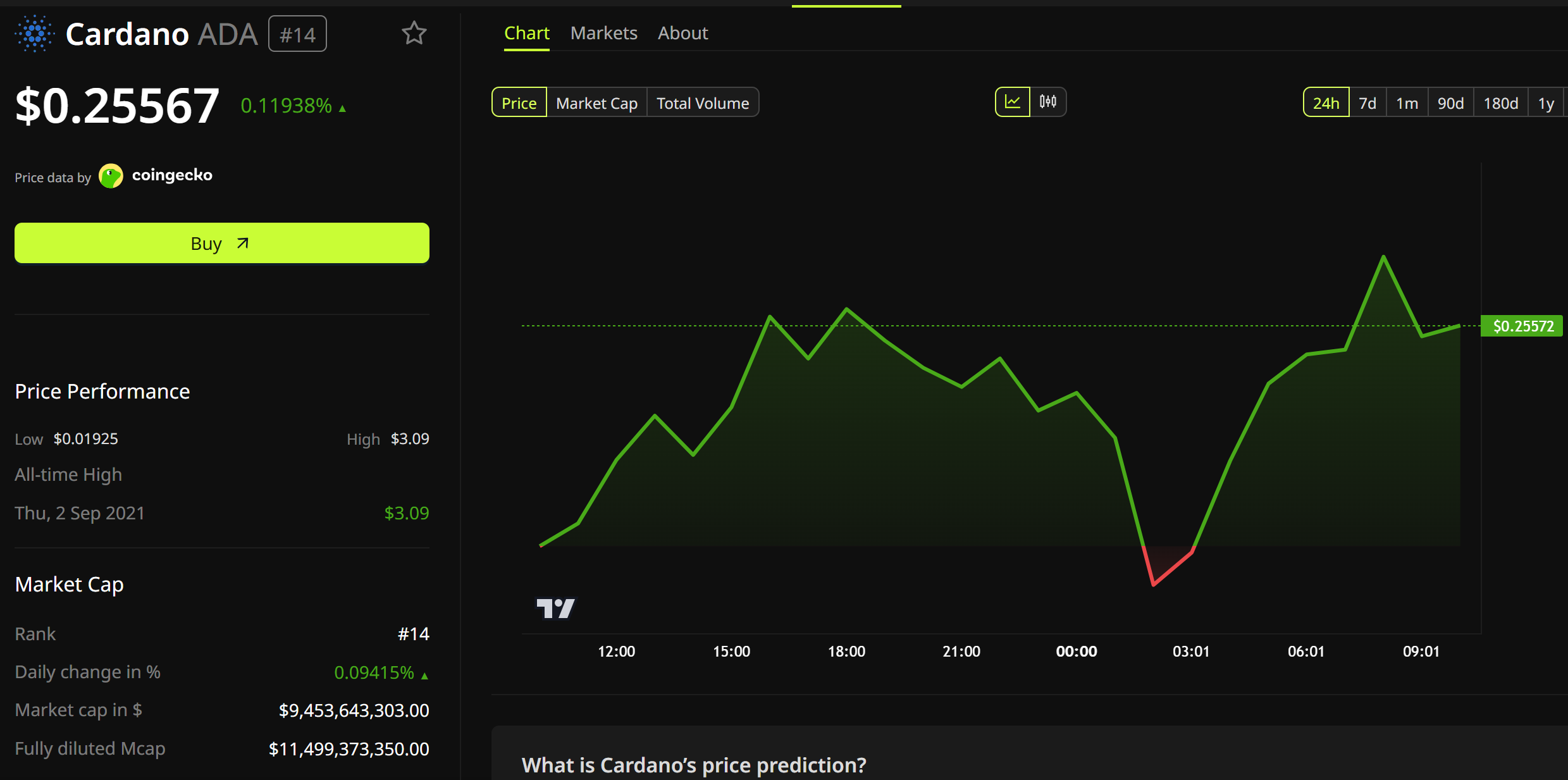
ADA traded near $0.25 at market cap rank 14, down about 5% on the week, per BeInCrypto data.
Other networks face the same math. Bitcoin alone holds billions in exposed coins sitting in addresses with revealed public keys. Earlier research on Q-Day projections flagged the same risk.
“That gives us median estimate ~10 years before modern public key crypto is definitively broken. (That said, can happen sooner! It’s not a point estimate, but a distribution, fuzzy on both the downside and upside.),” Haseeb Qureshi, Managing Partner at Dragonfly said.
Cardano’s defense centers on lattice problems such as Learning With Errors, believed to resist both classical and quantum attacks.
The team plans to fold US NIST FIPS 203 through 206 standards into its roadmap. Those specs formalize ML-KEM, ML-DSA, SLH-DSA, and Falcon-style signatures.
Hoskinson contrasted Cardano’s governance and hard-fork cadence with chains that face harder coordination on migration.
He pointed to a forthcoming Cardano research proposal on quantum resistance.
Community votes on the broader strategy are already underway. A parallel testnet rollout from Solana shows similar moves elsewhere.
“Quantum computers aren’t here yet, but the Solana Foundation is preparing for the possibility. To that end, we’ve consulted with Project Eleven to assess our quantum readiness. We’re pleased to announce a first step, the deployment of post-quantum signatures on a Solana testnet,” wrote the Solana Foundation in a post.
The 2033 window being able to hold depends on hardware progress, error correction, and fault tolerance. Those hurdles remain unsolved today.
The post Cardano Founder Warns Crypto’s Quantum Threat May Hit Before 2033 appeared first on BeInCrypto.





Prism’s privacy layer could revolutionize Bitcoin’s institutional adoption by enabling confidential transactions, appealing to regulated entities. The post VerifiedX introduces programmable, private Bitcoin with vBTC
The air strikes risk undermining diplomatic efforts, escalating regional tensions, and violating international humanitarian norms. The post Israel launches air strikes on Lebanon despite extended
The attack exacerbates regional instability, diminishing peace prospects and increasing the likelihood of future military confrontations. The post Iran drone attack targets UAE nuclear plant
Japan’s crypto trusts could democratize digital asset access, potentially boosting market participation but raising counterparty risk concerns. The post SBI Securities and Rakuten Securities plan