


Elon Musk needed one word for Europe’s loudest startup debate of the week. He posted “Wow.” The trigger was Stripe CEO Patrick Collison’s story of a German founder who paid a €30,000 German notary fee to hear a 90-page investment contract read aloud. German law required the session.
Collison asked the founder whether the horror stories about German startup bureaucracy were exaggerated. The answer was that they are understated. The founder’s first company paid the bill and lost the day. His second company was incorporated somewhere else.
The rule is real, with Collison’s account pointing to Section 13 of the Beurkundungsgesetz, Germany’s notarization law. The statute orders a notary to read the full deed aloud to everyone in the room.
The parties must then approve it and sign by hand. Startup funding rounds get caught because the standard German company, the GmbH, cannot transfer shares or raise capital without a notarized deed.
The price is set by the state, not the notary. A second law, the GNotKG, ties the fee to the value of the deal. The bigger the round, the bigger the bill. The hours spent reading do not matter.
A court has already blessed that math, seen with venture lawyer Wolfgang Weitnauer reporting a ruling by the Higher Regional Court of Karlsruhe on one German funding round.
Investors put about €7 million into a company valued at €21 million before the deal. Exit clauses in the contract counted toward the deed’s value too.
The notary therefore assessed the transaction at roughly €35 million. The reading alone cost €63,110.85. The full notary bill reached about €100,000. The court upheld every euro.
Crypto founders may know the pattern, seeing as Germany leads the EU in licenses under the Markets in Crypto-Assets (MiCA) framework.
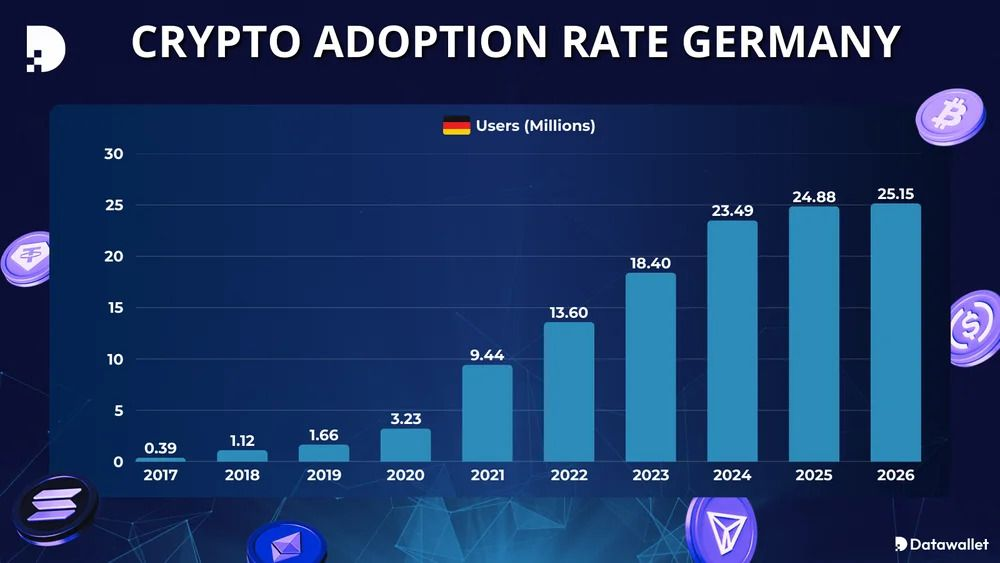
Even so, its crypto startups are leaving for friendlier bases. Smaller firms say compliance costs under MiCA outweigh the single market’s benefits.
Musk’s one-word reaction was the loudest megaphone. However, the sharpest contrast came from investors. Y Combinator co-founder Paul Graham replied that US investors close on the accelerator’s standardized SAFE, short for simple agreement for future equity, after checking only the names and the numbers.
No public reading. No statutory tariff.
“Our (Lieferando) contract was even longer, and the reading went on through the night, in German, mind you . I think it cost at least €200,000. The notary even stopped reading when I went to the bathroom. It was good fun, though,” added Just Eat Takeaway founder Jitse Groen.
His figure is an estimate, not an audited invoice.
Notwithstanding, the pain is seemingly not limited to Germany. Italian founder Stefano described a seed round that nearly died because Italian and Belgian notaries argued over a translated power of attorney. That standoff ended with a €21,000 invoice and mandatory in-person signatures.
Nevertheless, Brussels is already drafting a fix. In March, the European Commission proposed EU Inc., an optional EU-wide company form that promises fully digital formation within 48 hours.
One clause is now the flashpoint. Article 14 of the draft demands that company articles pass preventive administrative, judicial, or notarial control. Critics read that last word as a door for notary lobbies to walk back in.
Collison is not just posting either, seeing as five days earlier, he launched the Rhine Group with former European Central Bank President Mario Draghi.
The 55-member forum wants to turn Draghi’s 2024 competitiveness report into working reforms, and it meets for the first time in late September.
Whether notarial control survives the EU Inc. talks will show if Europe’s next company form retires the reading ritual or simply rebrands it.
Subscribe to our YouTube channel to watch leaders and journalists provide expert insights
The post €30,000 to Read a Contract Aloud: German Notary Fee Goes Viral After Musk’s ‘Wow’ appeared first on BeInCrypto.




Nvidia’s shift from China to US markets highlights the growing influence of US hyperscalers, raising concerns about market concentration risks. The post Nvidia proves reduced
Kalshi’s Head of Institutional says the single market users request most isn’t tied to sports or elections, it’s whether their own relationship will survive. The

Felix Pago, a stablecoin remittance startup, has successfully raised $200 million in Series B funding, as reported by Bloomberg and highlighted by crypto commentator @WuBlockchain.
The arrests highlight the urgent need for enhanced global regulatory frameworks to prevent cryptocurrency misuse in financing terrorism. The post South Korea arrests four over