

Gate has published the second edition of Gate Security Academy, produced together with Web3 security provider GoPlus Security.
This edition examines what smart contract audits can and cannot establish, and how users can assess a project’s security beyond an audit report. Gate Security Academy is a series dedicated to the different types of security issues in the crypto industry, drawing on real cases that users may encounter in everyday life and bringing together insights from both the platform and the security provider perspective.
Security is a dynamic state, not a certificate on a piece of paper.
Many projects that suffered hacks this year had already undergone security audits. Some had even been audited multiple times. This does not mean audits are worthless. It simply means that the questions an audit can answer are far narrower than most people assume.
An audit report describes a particular version of a project, reviewed by a particular team, at a particular point in time. But contracts can be upgraded, permissions can change, and the oracles and cross-chain bridges that projects depend on can change as well. New attack techniques emerge every week.
The moment an audit report is delivered, it begins to become outdated.
Even more concerning are older contracts that were deployed years ago and successfully passed audits at the time. These contracts are now being scanned again in large batches. Deep vulnerabilities in contracts that have been live for years can sometimes be discovered in just over ten minutes.
In this edition, GoPlus Security and the Gate Security Team discuss smart contract audits and vulnerability detection from the perspectives of both a security provider and a trading platform.
Why do audited projects still get hacked? How should users read an audit report? What checks do trading platforms perform before and after listing a token? And how can ordinary users conduct their own checks before signing a transaction?
Adam, Partner at GoPlus: Adam is a Partner at GoPlus and Head of its Security Research Institute.
GoPlus Security is building the first decentralized security layer for Web3 and AI. By combining blockchain technology with cutting-edge AI security solutions, it provides users with intelligent, efficient, and decentralized security products and services.
Since 2022, GoPlus has grown to 30 million API calls per day and helping users prevent nearly $100 billion in potential losses.
Gate Security Team: Gate’s security department is responsible for building and maintaining the platform’s account, trading, and asset security systems. The team also regularly handles user appeals involving suspicious account activity and requests for assistance with investigations.
Founded in 2013, Gate was one of the first major exchanges to commit to 100% proof of reserves and currently serves more than 63 million users worldwide. Security is the foundation that makes this business possible. Through Gate Security Academy, Gate aims to explain the common mechanisms behind the real security risks users may encounter.
Adam, Partner at GoPlus:
A one-time audit does not mean a project will remain secure forever. Traditional smart contract auditing services now face four structural limitations.
Snapshot-based reviews. An audit is essentially a semi-manual inspection conducted by security engineers at a particular point in time. Its effectiveness depends on the quality of the tools, the expertise of the individual auditors, and their working conditions. But contract code can be upgraded, administrative permissions can change, and configuration parameters can be adjusted. From the moment a one-time audit report is delivered, it starts becoming outdated.
Inability to predict future threats. New vulnerability types and attack techniques continue to emerge. Historical audits cannot cover risks that have not yet appeared.
Uncontrolled external dependencies. Projects commonly rely on oracles, cross-chain bridges, and third-party protocols. Changes in the risks associated with these dependencies fall outside the scope of traditional audits.
Vulnerabilities emerging in older contracts. Contracts deployed several years ago that passed audits at the time are now being scanned in batches using automated tools, uncovering previously undetected vulnerabilities. Examples include deep vulnerabilities in established DeFi protocols that remained undiscovered for years after their official launches.
As for the abuse of privileges, it occurs more often during the operational stage than in the contract code itself.
Common causes include excessive owner privileges, such as the ability to mint tokens at will, blacklist addresses, or pause trading; compromised administrator private keys; improper multisignature management; malicious proposals; and governance attacks.
These are all security issues that can arise during ongoing operations.
Even if an audit report identifies permission-related risks, who monitors those permissions afterward? And who determines whether subsequent actions are secure and reasonable? A traditional audit cannot answer these questions.
Launching a contract after an audit is only the beginning of security work, not the end.
What projects need is continuous security throughout the entire contract lifecycle, rather than a one-time audit report.
Gate Security Team:
An audit can tell users what the code is capable of doing, but it cannot tell them what the project team intends to do.
This is one of the most important lessons we have learned from years of token listing reviews.
Many incidents are rooted in the intentions of the project team.
A contract can be technically compliant, with owner permissions designed within normal parameters, yet the project team can still choose a particular moment to exercise those permissions: changing trading rules, enabling blacklists, or minting additional tokens.
From a code perspective, these actions are entirely legitimate. An audit report will not necessarily flag them as vulnerabilities because they are part of the contract’s intended design.
That is why technical audits need an additional layer of safeguards.
At Gate, we conduct strict project screening and reviews during the token listing process. We also require project teams to sign declarations committing not to engage in malicious conduct, and we monitor their compliance with those commitments.
This additional layer is intended to address what audits cannot: the absence of code vulnerabilities does not guarantee that a project team will never make decisions that harm users.
For projects that have already been listed, we conduct regular security audits and use on-chain event monitoring to track contract status.
Users can also check the current risk indicators of a particular contract at any time.
Gate Security Team:
The crypto industry has a structural characteristic: a large portion of its business, especially DeFi, operates much like modular finance.
Different platforms are built from shared components, including contracts, software libraries, wallets, price oracles, cross-chain bridges, connectivity providers, web interfaces, and systems used to distribute updates.
That means the question is not only whether a project’s own contracts are secure, but whether every component it depends on remains reliable.
If an upstream component fails, losses can spread down the entire chain of dependencies.
Looking back at major attacks, the problem often originated somewhere outside the protocol’s core logic: a supplier, a development tool, the way software reached users, or the process through which users approved transfers.
Adam, Partner at GoPlus:
A new attack model has already taken shape and is spreading rapidly: hackers use automated tools to discover vulnerabilities efficiently.
Attacks have evolved from manual research conducted by specialists into an assembly-line process.
If the industry’s approach remains limited to hiring an audit firm to produce a report before launch, or calling a security company only after a problem has been discovered, it is like trying to fight a machine gun with a bow and arrow.
The only effective way forward is to counter these attacks with tools that are equally efficient.
At the industry level, the necessary shift is from one-time audits or reactive expert intervention to continuous security throughout the entire lifecycle.
Take GoPlus DeepScan’s three-part smart contract security solution as an example. It provides a practical, closed-loop approach.
Before launch — Token security self-check: Quickly identify potential backdoor risks within minutes, including honeypot tokens, malicious minting functions, blacklists, abnormal transaction taxes, and excessive owner privileges.
At launch — AI smart contract auditing: Conduct in-depth analysis of source code, permission management, and business logic; scan for vulnerabilities at both the syntax and business logic levels; and deliver a structured audit report.
After launch — Continuous security monitoring and regular checks: Track newly discovered vulnerabilities, attack incidents, and risks involving external dependencies such as oracles, cross-chain bridges, and third-party protocols in real time. Continuously assess whether the project is affected, issue routine risk alerts, and conduct regular contract security checks and ongoing audits.
Adam, Partner at GoPlus:
Frankly speaking, in the short term, attackers now have more ways to discover vulnerabilities.
There are three reasons for this.
Automated tools have significantly lowered the barrier to vulnerability discovery. Work that previously required top security researchers several weeks can now be completed by automated attack pipelines in just a few minutes.
There is an enormous number of older contracts on-chain that passed audits years ago. For attackers, these contracts represent a vast gold mine of potential vulnerabilities.
Attackers only need one successful exploit. Finding a single vulnerability can be enough to steal funds, while defenders must protect against every possible vulnerability.
It may take hackers only a few minutes to exploit these vulnerabilities and steal funds. But defenders can also discover the same vulnerabilities in just a few minutes.
The difference comes down to whether the project team uses the right tools before the hackers do.
More importantly, defenders have three structural advantages that attackers do not.
First-mover advantage. Defenders can repeatedly review contracts before launch and throughout their operation. Attackers can only hope that defenders have not already performed those checks.
Cost advantage. AI audits can be purchased on a per-audit or annual subscription basis, making them affordable enough for routine and comprehensive use.
Compounding security knowledge. Security knowledge bases continue to evolve with every new attack. The more these defense systems are used, the stronger they become.
When comparing on-chain and off-chain models, both who protects your assets and the types of risks you face are completely different.
On-chain self-custody: Security = Private key security + Smart contract security.
You are solely responsible for security. If your private key is lost or stolen, there is no customer support team you can appeal to.
Every interaction also exposes you to on-chain risks, including approval vulnerabilities, phishing signatures, and honeypot tokens.
The advantage is that your assets do not depend on the creditworthiness of any platform.
Exchange custody: Security = Platform security + Account security.
Private keys are managed by the platform through mechanisms such as hot and cold wallet separation, multisignature controls, and risk management systems.
In effect, you are outsourcing technical security to the exchange.
However, you still need to protect your exchange account through secure passwords, two-factor authentication, phishing prevention, and proper API key management.
It is also essential to choose an exchange with a trustworthy reputation.
Overall, on-chain security is about private key protection and the risks of your own actions, while exchange security is about platform trust and security infrastructure.
The former tests your awareness of Web3 security. The latter tests both the exchange’s infrastructure and your own account security habits.
Gate Security Team:
First, we conduct regular security audits of listed projects and continuously monitor contract status through on-chain events.
Whether a contract has been upgraded, permissions have changed, or unusual large transactions have occurred are all things that need ongoing attention.
A security assessment conducted when a token was first listed has a limited shelf life, just like the audit reports Adam described.
Users can also check the current risk indicators of a particular contract at any time.
Now let’s talk about the platform itself.
Gate’s security bug bounty program remains open to security researchers around the world.
Anyone who discovers a vulnerability can submit it to us through three channels: sec@gate.com, support tickets, or the HackenProof platform.
We expect project teams to accept security scrutiny, and we must be willing to subject ourselves to the same scrutiny. Security requirements should not be one-sided.
Having discussed tokens and the platform, let’s turn to account security.
Our advice is not to search for a single “safest place” to store all your funds. It is more practical to separate assets according to how frequently you need to use them.
Funds used for frequent trading can remain in your spot account for easy access. Assets that you do not expect to move for six months or a year can be placed in Gate Vault.
Gate Vault uses MPC combined with a 2-of-3 signing mechanism.
The private key is divided into three shares, held separately by the user’s device, Gate, and an independent third party.
The complete private key is never reconstructed at any stage, and neither Gate nor the independent third party can initiate a transaction on its own.
All outgoing transfers are also subject to a 48-hour delay before completion.
These 48 hours serve as a security buffer for users, during which they can freeze the outgoing transfer at any time.
Even if something unexpected happens, the delay gives users time to discover the problem and stop the transfer.
Another improvement is the Gate Account Security Protection Plan.
This plan is based on the Security Score.
Previously, account security settings were scattered across different pages, including login verification, authenticator apps, two-factor authentication, passkeys, trading limits, and withdrawal limits.
Users often found it difficult to understand how much of their account security setup they had actually completed.
The Security Score brings these measures together into a score from 0 to 100.
Users can immediately see which protections they have enabled and which are still missing. When the score changes, the system also reminds users to strengthen their settings.
Users with a Security Score of 80 and an account in good standing can activate the protection plan.
Once activated, it provides an additional layer of protection after users have completed their own security measures.
During the coverage period, if assets are transferred out of an account without authorization, users may apply for compensation if the incident meets the applicable rules.
The current maximum coverage for a single incident is $200,000.
This limit will be increased, with tiered coverage based on VIP level reaching up to $1 million.
Applications must be submitted within 45 days of the incident through “My Protection” by contacting security customer support.
Required materials include a police report and records of the asset transfers.
Adam, Partner at GoPlus:
An audit report that can guide action, rather than simply be filed away, should contain at least four elements.
Security Score (Quantifiable Rating) — For Initial Screening, Not Final Conclusions
Project teams can use the score as a quantitative benchmark for internal security assessments and compare changes after each iteration.
Exchanges can use it for preliminary token listing reviews, filtering out projects that clearly fail to meet security requirements at the first stage.
Ordinary users can treat the score as an entry point: avoid projects with low scores, and examine the key findings of those with high scores.
Key Findings (High-Risk Issues and Core Conclusions) — For Decision-Making
This is the executive summary of the report.
It should identify which issues are severe enough to block a launch and must be fixed beforehand.
For managers without technical backgrounds and exchange listing review teams, understanding the key findings is often sufficient.
Issue Details (Vulnerability Evidence and Impact Analysis) — For Identifying Problems
This section is intended for technical teams.
It should include the precise vulnerability location, down to the contract, function, and line of code, as well as the vulnerability type, severity level, attack path, and root cause analysis.
Good issue descriptions should provide reproducible execution paths and triggering conditions, rather than simply listing problems.
Remediation Recommendations (Actionable Fixes) — For Closing the Loop
Recommendations must be specific, actionable, and detailed enough to implement at the code level.
After remediation, the contract should be rescanned and retested to verify the fixes.
Together, these steps form a complete closed loop: security scoring, key findings, issue details, remediation, and rescanning.
Gate Security Team:
Based on our experience developing contract auditing features, we would add three points.
First, the two sections most easily overlooked are often the ones that should come first: audit objectives and limitations, and the scope of the audit.
We have established nine dimensions for our reports: audit objectives and limitations, scope, severity matrix, priority assessment, vulnerability details, risk paths, threat modeling, key function analysis, and remediation recommendations.
But the first two determine whether readers will misunderstand the entire report.
If the limitations are not clearly stated, readers may assume the audit covers everything.
If the scope is unclear, readers cannot tell whether only the main contract was audited or whether the review also covered liquidity pools, strategy contracts, oracles, and external dependencies.
Many promotional materials simply say “Audited” without explaining what was actually audited.
Such a statement provides almost no useful information.
Second, when reviewing key findings, users should consider risks together, even if each individual feature does not qualify as a vulnerability.
Here is a common combination found in audit reports.
The contract owner can blacklist addresses and freeze assets.
Trading pairs can be reset, preventing ordinary users from transferring tokens.
Minimum holding requirements can prevent users from selling their entire balances.
A single owner can also change multiple critical rules at any time.
Viewed separately, these four features may all be considered normal design choices.
Taken together, however, they indicate that control over the contract is highly concentrated in the hands of one person.
Third, users should understand how the report was generated, because that determines the boundaries of its reliability.
Our contract auditing process has three stages.
The first is static analysis, which checks fundamental risks such as access control, reentrancy, price manipulation, flash loans, and logical consistency.
The second is business scenario modeling. We extract the contract’s core interaction scenarios, verify business paths and boundary conditions, and identify issues that rule-based scanning may miss.
The final stage is semantic verification. We examine critical business paths individually to confirm whether the risks identified in the first two stages are genuine.
The third stage is primarily intended to reduce false positives.
If an audit report is filled with false alarms, users quickly lose patience and may eventually skip the entire checking process.
That is why the false-positive rate directly determines whether a security tool will actually be used.
Adam, Partner at GoPlus:
Check token security before trading.
Before buying a new token, examine its security risks.
Pay particular attention to potential backdoors such as honeypot tokens, malicious minting, blacklists, abnormal transaction taxes, and excessive owner privileges.
Regularly clean up contract approvals.
Revoke approvals granted to DApps you no longer use, especially unlimited approvals.
Many theft incidents originate from problems with contracts that users previously authorized.
Strengthen account security.
Use strong passwords and enable two-factor authentication.
Apply the principle of least privilege to API keys, and never grant withdrawal permissions to untrusted tools.
Make phishing prevention second nature.
Verify domain names before signing, avoid links sent through private messages, and be skeptical of airdrops, customer support messages, and promises of high staking returns.
Phishing content is becoming increasingly convincing, so users need to remain rational and alert at all times.
Separate assets according to their purpose.
Keep only small amounts needed for everyday use in hot wallets.
For substantial holdings, hardware wallets are recommended.
Do not put all your eggs in one basket.
Pay attention to a project’s approach to security, not just its audit reports.
Whether a project conducts continuous audits and maintains security monitoring mechanisms matters more than an audit report issued years ago.
Prioritize projects that take security seriously and are willing to disclose how their security systems are built and maintained.
Gate Security Team:
Adam’s six recommendations are already very comprehensive.
We would like to connect several of them with Gate’s tools and turn them into actions users can take immediately.
Check token security before trading.
Users can directly use Gate AI’s contract auditing feature.
Submit a contract address and receive a report within minutes.
Focus on four areas: owner privileges, blacklists and trading restrictions, minting permissions, and transaction taxes.
If any one of these four areas is flagged red, users should stop there. There is no need to look any further.
Strengthen account security by raising your Security Score above 80.
Fund passwords, authenticator apps, two-factor authentication, anti-phishing codes, passkeys, daily withdrawal limits, and withdrawal channel management are all included in the checklist.
Users simply need to follow the prompts and complete each item.
The greatest value of the Security Score is that it turns settings scattered across different pages into an organized checklist, so users do not have to decide for themselves which protection to enable first.
Reaching a score above 80 also allows eligible users to activate the Account Security Protection Plan, providing an additional layer of protection after they have strengthened their own account security.
Use two existing tools to protect against phishing.
If you receive a message claiming to be from Gate, first use our Official Verification Channel to check whether the domain or email address belongs to us.
All emails sent by Gate will include the Anti-Phishing Code you configured yourself. Any email missing that code should be treated as fake.
Check approval amounts carefully before signing.
A contract itself may be secure, but that does not mean the transaction a website asks you to sign is safe.
A legitimate DApp will usually request only the amount needed for a particular transaction.
If it immediately asks for unlimited approval, that alone is a reason to stop and think.
If a wallet pop-up displays nothing but a string of characters you cannot understand, refusing to sign is always safer than signing first and asking questions later.
Finally, it is worth emphasising that security is dynamic, not static.
Launching a project after an audit is only the beginning of security work.
For project teams, this means continuous monitoring after launch is more important than the audit report itself.
For trading platforms, it means that listing a token is only the beginning of the review process.
And for ordinary users, the few minutes spent checking a transaction before signing are among the lowest-cost security measures available, yet also among the easiest to overlook.
There is no such thing as a security certification that guarantees safety forever.
When every party takes one extra step, the balance shifts toward the defenders.
About Gate
Gate, founded in 2013 by Dr. Han, is one of the world’s leading cryptocurrency and integrated financial services platforms, spanning financial and everyday use cases including asset management, trading and payments. Serving over 63 million users globally, it supports trading across 5,400+ digital assets and 12,800+ stock assets and ETFs, while providing access to a comprehensive range of TradFi assets, including metals, stocks, indices, forex, and commodities to meet users’ end-to-end needs across asset holding, trading, and spending. As an industry benchmark, Gate was among the first platforms to implement 100% Proof of Reserves. Its ecosystem includes Gate Money, Gate Wallet, Gate Ventures, Gate for AI Agent, and a wide range of products and services.
Disclaimer:
This content does not constitute an offer, solicitation, or recommendation. You should always seek independent professional advice before making investment decisions. Note that Gate may restrict or prohibit certain services in specific jurisdictions. For more information, please read the User Agreement.
The post Gate Security Academy | Gate & GoPlus: How to Read Audit Reports and Identify Smart Contract Vulnerabilities appeared first on BeInCrypto.






Google’s Tool Retrieval in the Gemini API could streamline AI agent efficiency, reducing costs and improving tool-selection accuracy. The post Google adds Tool Retrieval to
Rezolve recorded $130.8 million in first-half 2026 revenue and a net loss. Its savings target applies after the operating program is fully implemented.
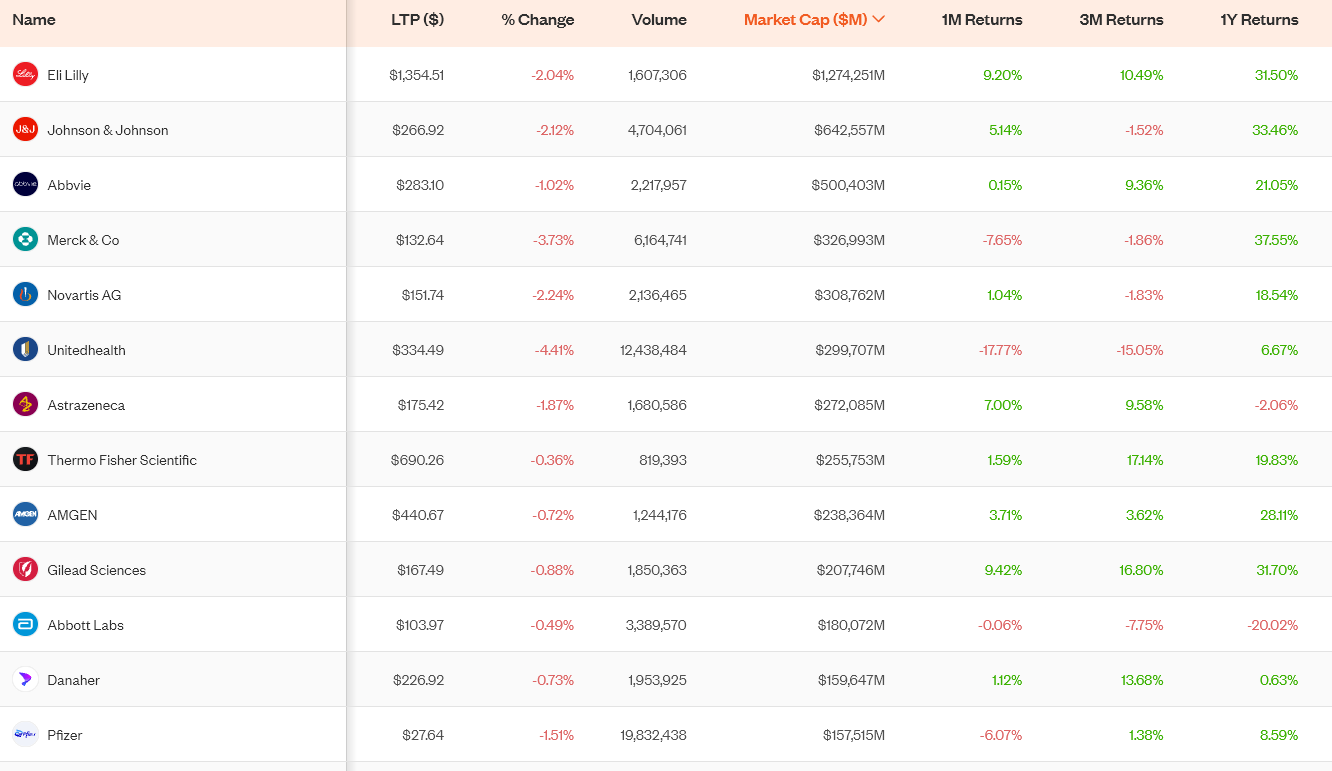
Wall Street’s biggest investors are pulling billions out of technology stocks, even as the companies powering the AI boom continue reporting record earnings. Hedge funds
Eligible users can trade Anthropic stock (ANT) through Bybit Direct Stocks. The service does not include IPO subscriptions or allocations at the offering price.

Blockchain Bodega is here and you know the vibes. We’re at the intersection of hip-hop culture and web3, exploring this new digital frontier. Who better to guide you through these uncharted lanes than Ock Chain – The Bitcoin Boss and the Consensus Corner Boys?
Ock Chain doesn’t just cook up random details about cryptocurrency; he lives it. Ock’s been deep in the game since Bitcoin was just a baby.
And let’s not forget about the Consensus Corner Boys. They’re our skilled crew of blockchain enthusiasts. They’re here to educate, entertain, and enlighten.
Welcome to Blockchain Bodega!
Copyright © 2023 Blockchain Bodega. All rights reserved.