






The wealth surge highlights economic disparity, with gains concentrated among the top 10%, potentially influencing future policy and market stability. The post Wall Street drives
Jimnez’s injury could hinder Wolves’ promotion ambitions, highlighting their reliance on his leadership and goal-scoring prowess. The post Wolverhampton’s Jimenez exits injured as Everton seeks
A Fed rate hike in October could trigger bond market volatility, stress rate-sensitive sectors, and reshape corporate refinancing landscapes. The post DoubleLine CEO Gundlach advocates
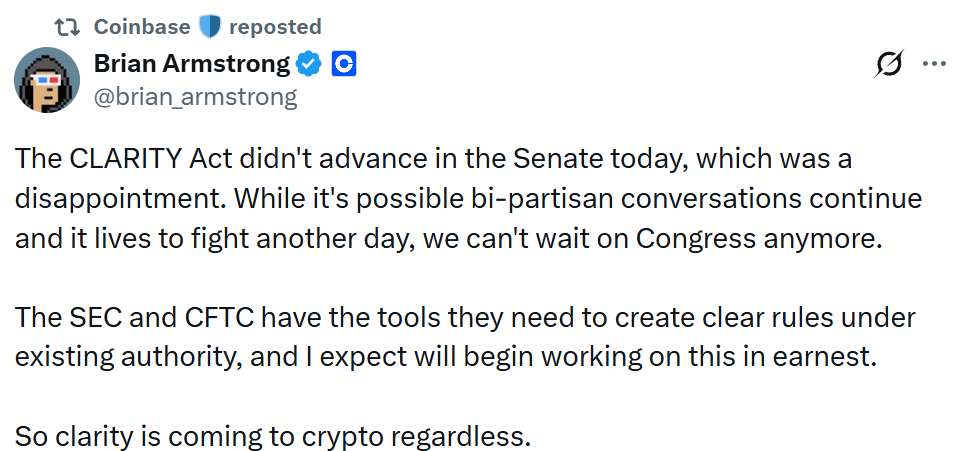
Today in crypto, the House Ways and Means Committee advanced a sweeping crypto tax bill, while the industry is turning its attention to the SEC and CFTC after the CLARITY Act stalled in the Senate. Bernstein expects the agencies to respond with “aggressive and swift” rulemaking to fill some of the gaps left by Congress.House panel advances sweeping crypto tax billThe US House Ways and Means Committee advanced the Digital Asset Tax Certainty Act in a bipartisan 38–5 vote on Wednesday, sending a broad overhaul of federal crypto tax rules to the full House.The legislation would introduce new tax treatment for qualifying dollar-pegged stablecoins and certain crypto lending agreements, while extending wash-sale rules to widely traded digital assets. It also addresses how mining and staking income is taxed.For everyday crypto transactions, the bill would create a de minimis exemption for qualifying network and transaction fees of $10 or less, allowing users to avoid recognizing small gains or losses when paying blockchain fees.The House committee vote comes one day after Senate lawmakers failed to advance the CLARITY Act, its broader crypto market structure bill. The procedural vote fell short of the 60 votes needed to proceed, shifting more attention toward regulators as Congress struggles to establish a comprehensive federal framework. SEC Chair Paul Atkins and CFTC Chair Michael Selig said Wednesday that their agencies would continue developing crypto rules using their existing statutory authority.Bernstein expects ‘aggressive’ rulemaking from SEC, CFTC, following CLARITY Act failureBernstein analysts expect “aggressive and swift” rulemaking from the US Securities and Exchange Commission (SEC) and Commodity Futures Trading Commission (CFTC), after the Digital Asset Market Clarity (CLARITY) Act failed to pass a Senate cloture vote on Tuesday.Bernstein analysts said the regulatory agencies will publish new regulations to “make up for the time lost negotiating the CLARITY Act,” in a Wednesday note shared with Cointelegraph.The analysts said they expect agency regulations including token taxonomy for raising capital, developer protection measures concerning decentralized finance and self-custodial protocols, innovation exemptions for equity tokenization, faster approval times for real-world asset perpetual futures, and amendments to rules around federal sports even contracts and their classification as swaps.Bernstein said that these federal agencies will bring more regulatory clarity for the industry, to compensate for the failure of the CLARITY Act, which would have “fool-proofed the industry against political regime shifts.” Today in crypto, the crypto industry is already turning to SEC and CFTC rulemaking after the CLARITY Act failed to advance, though a procedural path remains to revive the bill. Meanwhile, a House tax package left out a proposed tax deferral for mining and staking rewards.Crypto industry turns to US regulators after CLARITY setbackCrypto industry leaders are looking to US financial regulators to fill the regulatory gap after a major crypto bill establishing a regulatory framework for digital assets stalled in the Senate on Tuesday.The Senate voted 49-50 on a motion to invoke cloture and advance the CLARITY Act, short of the 60 votes needed as Democrats raised concerns over US President Donald Trump’s crypto investments. Industry executives said the result was a disappointment, but pointed to potential rulemaking from the US Securities and Exchange Commission and Commodity Futures Trading Commission as the next best source of regulatory clarity. Source: Brian ArmstrongSpeaking to Cointelegraph’s Chain Reaction before Tuesday’s vote, Fireblocks US policy director Jessica Martinez said the company would continue engaging with regulators if the legislation failed. “We’re going to continue working with the regulators, the SEC and the CFTC specifically,” Martinez said. Meanwhile, Ripple CEO Brad Garlinghouse on Tuesday, following the vote, said that US regulators will “continue to work hard to issue rules to fill the legislative gap,” as a reason to remain optimistic. Their belief comes as SEC Chair Paul Atkins reiterated his commitment to deliver clearer crypto rules at the Solana Policy Institute Summit on Monday. However, there’s concern the solution won’t give long-term investors the same confidence that legislation would provide.“Rejecting the bill leaves firms completely dependent on agency guidance and ongoing administrative discretion,” added NEAR chief legal officer Abhishek Vaidyanathan.“Firms setting their 2027 budgets would face another prolonged delay, forcing them back into case-by-case judgments and repeated legal work while counterparties continue to price in regulatory uncertainty,” he added. Bitget Wallet chief operating officer Alvin Kan told Cointelegraph that failure to advance the bill on Tuesday brings “continued uncertainty over how securities, commodities and money-transmission rules apply across different products.”