


For a long time, the public perception of digital assets was tied almost exclusively to price charts. If Bitcoin went up, it was viewed as a success; if it fell, it was labeled a failure. This narrow view often ignored the underlying goal of the technology: to function as a functional medium of exchange.
As we move through 2025 and look toward 2026, the industry is shifting away from purely speculative trading. The focus has moved toward infrastructure that allows users to move value without needing a traditional bank account as a permanent intermediary. This transition marks a utility phase where the value of a token is defined by its practical application in the global economy.
A primary hurdle in using digital currency is that most local retailers do not accept direct wallet-to-wallet transfers at the register. CoinsBee addresses this gap by acting as a bridge between blockchain networks and retail point-of-sale systems.
The platform allows users to convert various tokens into digital vouchers for thousands of established brands. When evaluating the logistics of online shopping with crypto, this method bypasses the need for a merchant to upgrade their hardware or software. By purchasing a voucher for a grocery store or an electronics shop, a user effectively spends their crypto at a brand that might not otherwise support blockchain payments for years.

Direct checkout experiences for businesses are increasingly handled by dedicated payment processors. BitPay serves as a functional layer for businesses to accept digital assets without the requirement of holding them on their balance sheets.
When a customer pays with a mobile wallet, the processor can instantly convert the crypto into local fiat currency like Dollars or Euros. This mechanism protects the merchant from price volatility. For the consumer, it facilitates payment for high-ticket items, such as computer hardware or luxury goods, using a standard QR code scanning process.
The travel industry is currently one of the most active sectors for practical crypto usage. Travala operates as a booking engine for hotels, flights, and tours, accepting dozens of different cryptocurrencies as native payment options.
This is particularly relevant for international travelers seeking to avoid the foreign transaction fees often charged by credit card issuers. By paying for a hotel in Southeast Asia with a stablecoin pegged to the US Dollar, a traveler avoids multiple layers of currency conversion fees and bank-mediated settlement delays.
Utility also extends to how users manage capital and liquidity. Aave is a decentralized finance (DeFi) protocol that allows users to deposit their assets into liquidity pools.
Once deposited, these assets can serve as collateral to borrow other tokens. For example, an individual holding Ethereum who requires liquidity for a real-world expense can borrow a stablecoin against their holdings. This allows them to access capital without selling their original asset, providing a way to manage cash flow while maintaining a long-term investment position.
Sending money across borders has historically been slow and expensive, especially for freelance workers in emerging markets. Bitwage provides a service where employees or contractors can receive their salary in cryptocurrency, even if their employer exclusively sends traditional bank transfers.
The platform receives the fiat payment and distributes a chosen percentage of crypto to the worker’s private wallet. This removes the reliance on local banking systems that may be subject to high inflation or restrictive capital controls, offering a more direct route for cross-border labor compensation.
The crypto debit card has evolved from a niche product into a standard financial tool. Gnosis Pay is a decentralized payment network that links a user’s self-custody wallet directly to a Visa debit card.
Unlike older crypto card models that require a user to “top up” a balance held by a centralized company, these newer systems allow funds to stay in the user’s control until the moment of the transaction. When the card is used at a physical terminal, a smart contract executes the trade, making the assets liquid in real-time.
Infrastructure utility includes how users identify themselves and their assets online. The Ethereum Name Service (ENS) replaces long, complex wallet addresses with readable names ending in “.eth.”
In the current market, this functions as a portable digital identity. One ENS name can point to a website, a social media profile, and multiple wallet addresses across different blockchains. It simplifies the user experience by making it as easy to send a payment as it is to send an email, reducing the risk of manual entry errors.
| Platform | Primary Function | Settlement Speed | Best For |
|---|---|---|---|
| CoinsBee | Vouchers/Gift Cards | Near-Instant | Retail & Groceries |
| BitPay | Merchant Gateway | Real-Time | High-Ticket Retail |
| Travala | Travel Booking | Real-Time | Global Tourism |
| Aave | Lending | Block-Time | Capital Management |
| Bitwage | Payroll | Same Day | Remote Workers |
| Gnosis Pay | Visa Debit | Instant | In-Person Spending |
| ENS | Identity | Permanent | User Experience |
Real-world utility is increasingly defined by the removal of technical friction. In the early years of the industry, using Bitcoin required technical knowledge of private keys and manual gas fee calculations. Today, the most utilized platforms are those that move these complexities to the background.
By 2026, utility is characterized by speed, accessibility, and cost-efficiency. If a blockchain transaction takes significantly longer or costs more than a traditional payment method, it rarely gains traction. The platforms mentioned above have seen adoption because they provide the global reach of the blockchain while matching the convenience of traditional financial systems.

The shift from digital assets as an investment to assets as a tool is ongoing. As more bridges are built between decentralized protocols and the physical economy, the distinction between a “crypto user” and a “standard consumer” continues to blur. Whether through gift cards, decentralized loans, or global payroll, the technology is becoming a standard component of how people manage their daily finances.
The post Top 7 Crypto Platforms That Make Cryptocurrency Actually Useful in 2026 appeared first on CryptoNinjas.






In an interview with journalist Karen Weise, Bill Gates argued that Silicon Valley is deploying AI too quickly for today’s regulatory frameworks to handle, warning
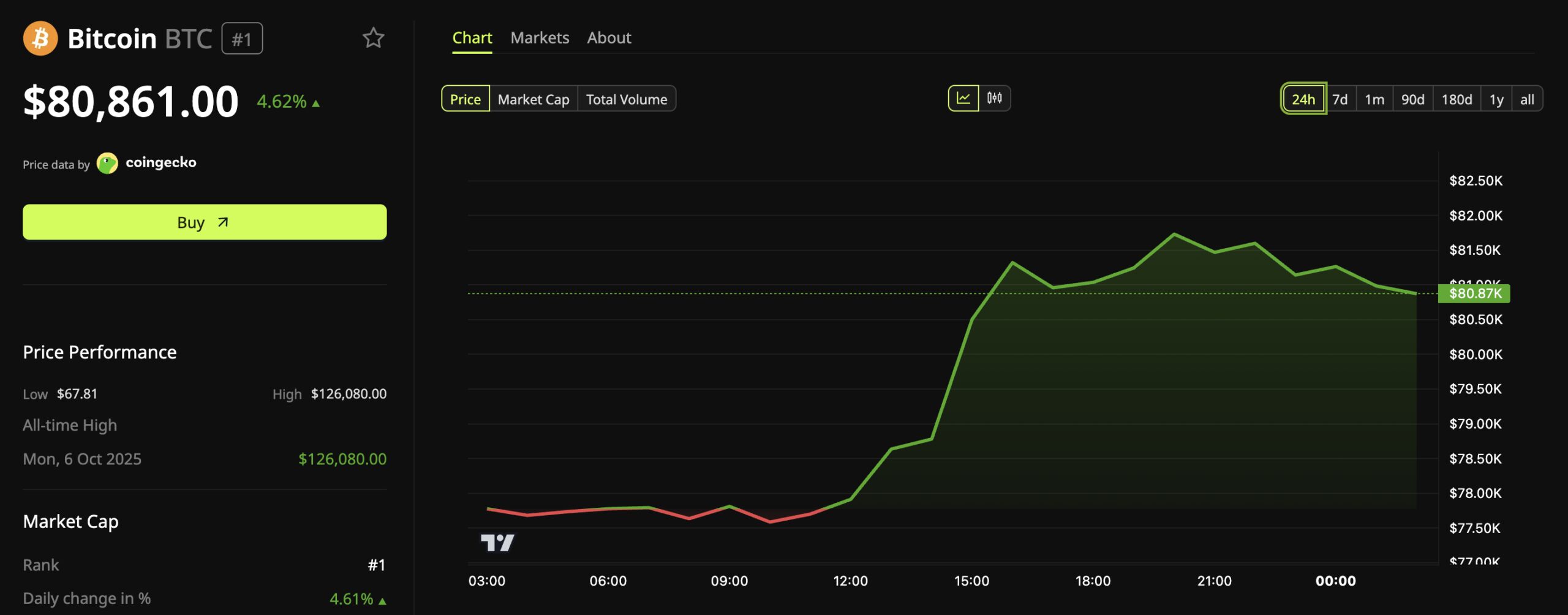
Bitcoin (BTC) and Ethereum (ETH) climbed to multi-month highs again this week, but prediction market traders still assign low odds to either asset approaching record

Traders scanning the order books got a surprise when FIO Protocol surged 12.41% in just 60 minutes, rising to a current price of $0.000379. This

The US-UK alliance against crypto scams could significantly enhance global cybersecurity efforts and deter transnational organized crime. The post US and UK strike first joint