


Ethereum co-founder Vitalik Buterin has pushed back against predictions that artificial intelligence could trigger a 50% Bitcoin crash within two years.
The debate began after Silicon Valley investor and AI-risk commentator Liron Shapiro said he sees a 50% probability that Bitcoin will fall more than 50% over the next two years because AI undermines what investors believe are the network’s security and robustness guarantees.
However, Buterin took the other side of this position, saying:
My basic reasons are that I am quite optimistic about cybersecurity in the long term and I see the primary problem as being getting the transition.


Buterin argued that Bitcoin should be able to handle security failures that do not require social consensus, including attacks affecting clients, mining pools and other network infrastructure. He also placed a very low probability on AI producing a fundamental break in Bitcoin’s hashing functions or proof-of-work system.
He said he would normally offer Shapiro a wager on the outcome, but his existing crypto holdings already amount to effectively making that bet with roughly 90% of his net worth. Buterin also suggested the same argument should apply to Ethereum.
The disagreement captures a growing divide over what increasingly capable AI systems mean for crypto security.
Shapiro’s argument does not require AI to break Bitcoin’s underlying cryptography. A wave of attacks that exposes weaknesses investors previously assumed were difficult or impossible to exploit could be enough to damage confidence, even if developers eventually repair the vulnerabilities.
Buterin is making a different calculation. He expects most AI-driven security failures to remain fixable and believes defenders will eventually benefit from the same technological advances attackers are using.
Evidence from across the crypto industry suggests the threat behind Shapiro’s warning is already becoming operational, even without a breakthrough against Bitcoin’s underlying cryptography.
In August, Bitcoin swap provider Boltz indefinitely suspended its service after months of automated, AI-assisted probing led to several contained exploits and began moving faster than its small development team could patch vulnerabilities.
Boltz said its non-custodial architecture protected customer funds, but the company absorbed losses from the exploits and eventually concluded it could no longer safely run the service.
The episode showed how AI could pressure the infrastructure surrounding Bitcoin without compromising proof-of-work or breaking the network’s cryptography. Attackers instead used automation to repeatedly search for weaknesses faster than defenders could investigate, patch, and deploy fixes.
That is the type of threat security executives expect to spread as offensive AI capabilities improve.
Deddy David, chief executive of blockchain security firm Cyvers, previously told CryptoSlate that the financial exposure from AI-powered crypto attacks could eventually reach hundreds of millions or billions of dollars.
“If AI can identify vulnerabilities at scale across core internet infrastructure, crypto will be one of the first markets to feel the impact,” David said.
The risk extends across wallets, bridges, exchanges, smart contracts and the software used to operate blockchain networks. Those systems provide attackers with considerably more potential entry points than Bitcoin’s core consensus mechanism itself.
The distinction is central to the disagreement between Buterin and Shapiro, as AI does not have to break SHA-256 to cause serious damage across the Bitcoin economy.
The unresolved question is whether those attacks remain problems developers can contain through upgrades and stronger defenses, as Buterin expects, or become severe enough to undermine the security assumptions investors have priced into Bitcoin.
The response from the broader technology industry increasingly resembles an arms race to ensure defensive AI develops at least as quickly as offensive capability.
Anthropic has restricted public access to its Claude Mythos model because of its ability to autonomously discover and weaponize software vulnerabilities.
The company has instead directed those capabilities toward defenders through Project Glasswing, an initiative involving technology companies and financial institutions including Amazon Web Services, Google, Microsoft and JPMorgan Chase.
The program uses Mythos Preview to identify and repair vulnerabilities in critical systems before malicious attackers equipped with similarly capable models can find them.
Anthropic has committed as much as $100 million in usage credits to the effort.
Meanwhile, the defensive push has since widened beyond individual companies.
More than 100 organizations, including Google, Microsoft, Anthropic and OpenAI, have signed an open letter warning governments and companies that AI-enabled cyberattacks are likely to become substantially more widespread and sophisticated within months.
Banks, payment companies, and major technology firms, including Capital One, Mastercard, Visa, Adobe, Oracle, and IBM, also joined the call.
The signatories argued that existing cybersecurity practices will not be sufficient as AI systems become more capable, particularly across historically under-resourced critical infrastructure.
They called for governments and technology companies to provide advanced defensive AI and security testing to organizations including hospitals and water utilities.
Crypto faces the same race, but with an additional complication: many of its systems hold immediately transferable financial assets and operate continuously on publicly visible infrastructure.
That makes the dispute between Buterin and Shapiro difficult to settle simply by asking whether AI can “break Bitcoin.”
The more immediate question is whether attackers gain a decisive advantage during the period before defensive tools, auditing practices and network infrastructure catch up.
The post Vitalik Buterin now confident AI won’t break crypto, betting 90% of his net worth appeared first on CryptoSlate.






This case highlights the evolving sophistication of crypto-related crimes and underscores the critical need for enhanced security measures and public awareness. The post Singaporean pleads
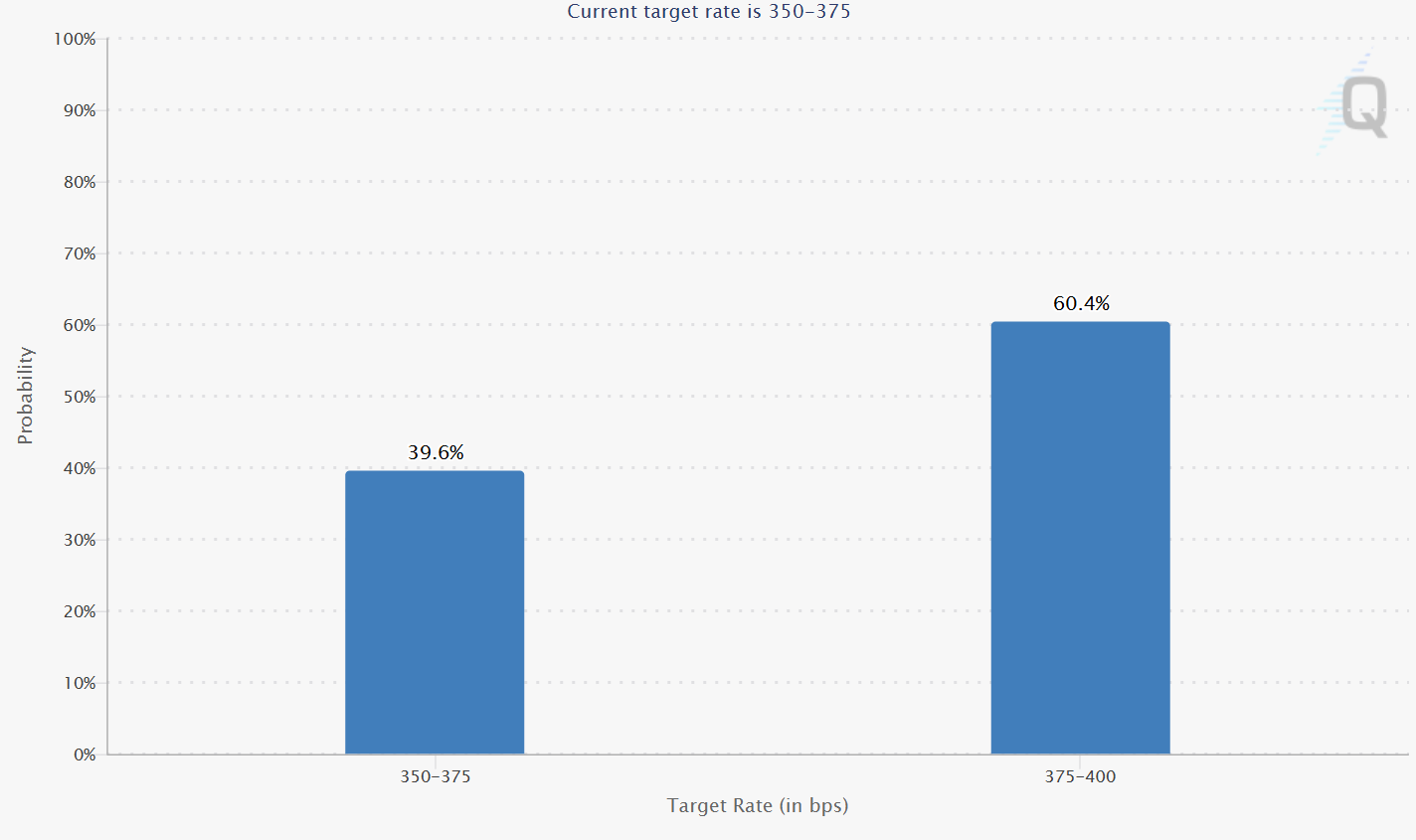
Crypto fund flows are becoming increasingly sensitive to changes in the US interest-rate outlook, with CoinShares arguing that Federal Reserve policy remains a key barrier to Bitcoin (BTC) breaking above $80,000 despite continued investor demand for crypto.In his latest market update, CoinShares head of research James Butterfil argued that “Bitcoin is trading like gold again, but the Fed still sets the ceiling” at around $80,000.That sensitivity was evident after Fed Chair Kevin Warsh’s speech at Jackson Hole. Warsh said progress on inflation had been modest and that price pressures were not easing quickly enough to give the central bank’s policy makers the confidence inflation was returning to its 2% target. Roughly $100 million exited digital asset investment products immediately after the speech, as markets sharply increased the probability of a September rate hike.Flows reversed over the following week, reaching $1 billion by Sept. 4. The turnaround coincided with comments from Fed Governor Christopher Waller, who pointed to recent signs of “disinflation” and said he was inclined to keep rates steady in September if upcoming inflation data showed further progress.“Investors are not exiting the asset class,” Butterfill wrote. “They are trading the rate path.”As of Monday, Fed Funds futures prices implied a roughly 60% chance of a rate hike following next week’s Federal Open Market Committee (FOMC) meeting, according to CME Group.Markets are now pricing in a 25 basis-point rate hike on Sept. 16. Source: CME GroupThe movements suggest that Bitcoin and broader digital asset markets remain highly sensitive to shifts in liquidity and monetary policy. Easier financial conditions have historically supported crypto and other risk assets.Related: Crypto Biz: AI took a back seat when Bitcoin started climbingTreasury buybacks add to liquidity backdropCoinShares’ assessment comes against the backdrop of a strong rebound in Bitcoin and the broader digital asset market last month, when the US Treasury announced plans to double certain long-dated bond buybacks from $2 billion to $4 billion per operation. Bitcoin climbed from the low $60,000s to above $80,000 during the month. The expanded buyback program is expected to run from Sept. 9 through Nov. 4.“Around the Treasury announcement we also saw equity sell-offs and shifts across the yield curve, layered on top of the ongoing noise from the Iran war — oil and equities swinging depending on whether or not people are feeling optimistic about diplomacy on any given day,” wrote 21shares co-founder Ophelia Snyder in her Substack newsletter last week.“Taken together, these factors suggest to me that the current Bitcoin rally may have less to do with crypto-specific catalysts and more to do with growing interest in de-risking exposure to the US specifically,” she added.The move reinforced the market’s focus on liquidity conditions and prompted Standard Chartered to forecast that Bitcoin could reach $100,000 before the end of the year.Related: Strategy’s $66B Bitcoin machine hinges on capital markets, not BTC price: Report
The incident highlights the critical need for robust security measures and transparency in blockchain networks to prevent future exploits. The post Liquid Network hacker returns
Anthropic’s updates enhance mobile coding flexibility, potentially increasing developer reliance on AI tools and influencing market competition. The post Anthropic adds usage details button and