
The International Monetary Fund (IMF) warned that tokenized assets will remain peripheral unless markets resolve who legally owns them and where settlement is final.
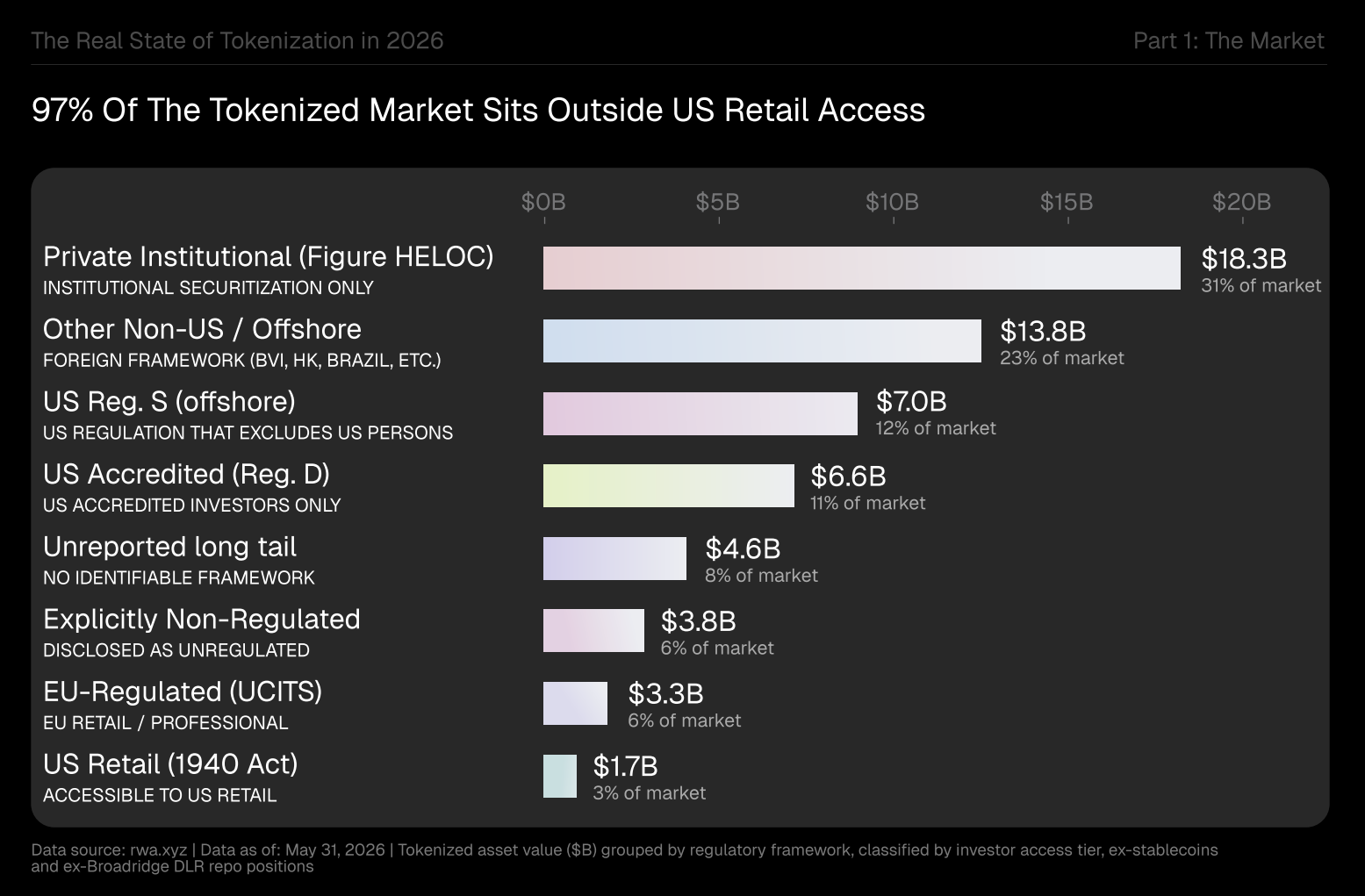
New BeInCrypto research shows why, mapping a $60 billion market fractured across regulatory regimes and largely closed to US retail investors.
Tobias Adrian, Financial Counsellor and Director of the IMF’s Monetary and Capital Markets Department, highlighted that tokenization is more than a technology upgrade. He noted that it changes the structure of the financial system itself.
Legal clarity is central to that argument. Adrian said clear rules on ownership, settlement, and jurisdiction will decide whether tokenization moves to the center of finance or stays at its edge.
“Market participants must know whether tokenized records constitute definitive ownership, whether settlement finality is legally recognized, and which jurisdiction’s law applies. Without clarity, tokenization will remain fragmented and peripheral,” Adrian said.
Follow us on X to get the latest news as it happens
BeInCrypto’s Real State of Tokenization in 2026 report puts hard numbers behind that concern. It tracked roughly $60 billion in tokenized real-world assets (RWAs) as of May 31, excluding stablecoins and repurchase agreements.
The market splits into several parallel markets rather than one. Regulatory regime, geography, and investor status divide them. About 97% of that value is either inaccessible to US retail investors or carries no retail-grade regulation.
Only $1.7 billion is open to retail buyers, while accredited US investors can access roughly $8.3 billion, including Regulation D products.
Ownership type is also part of the divide. Tokens fall into direct ownership, fund shares, or synthetic exposure. Synthetic structures give price exposure without any claim on the asset.
The distinction is clearest in equities. 59% of all stock tokens by count provide synthetic price exposure rather than actual share ownership, according to the report. Holders track a price but own no shares
Regulatory ambiguity compounds the problem. About 39% of the market lacks an identifiable regulatory framework, a gap the report flags as a due diligence risk for allocators.
Adrian frames the problem in principle. The report shows it in the data. Both point to the same unfinished work on ownership rights and settlement. The open question is whether that infrastructure arrives soon enough.
Subscribe to our YouTube channel to watch leaders and journalists provide expert insights
The post Who Actually Owns a Tokenized Asset? The IMF Wants an Answer appeared first on BeInCrypto.





Ripple’s latest 1 billion XRP escrow release arrived this week, yet the coin price barely blinked. Here’s why. The post XRP Price Prediction: 1 Billion
Dogecoin is trading around $0.074 after recovering from recent lows, yet it remains below a key resistance area. What’s next? The post Every Setup Says
Spot Bitcoin ETFs snapped a 10-day outflow streak with $221.7M in inflows, but BlackRock’s IBIT posted outflows, raising doubts about institutional conviction. The post Bitcoin
The DTCC’s tokenization pilot could revolutionize financial markets by enhancing liquidity, reducing risks, and enabling decentralized finance integration. The post DTCC’s tokenization pilot launches this