
Schwartz’s comments add to the debate over whether XRP’s long-term value depends on speculation or practical demand.
The discussion centered on transaction fees, token burning, and XRP’s function as a bridge asset. Schwartz argues that the token’s built-in advantages could support demand as XRPL expands, although greater network activity does not guarantee a higher market price.
Schwartz linked XRPL’s low transaction costs and reliable operation to its potential to attract financial activity, arguing that XRP could capture some of the resulting value.
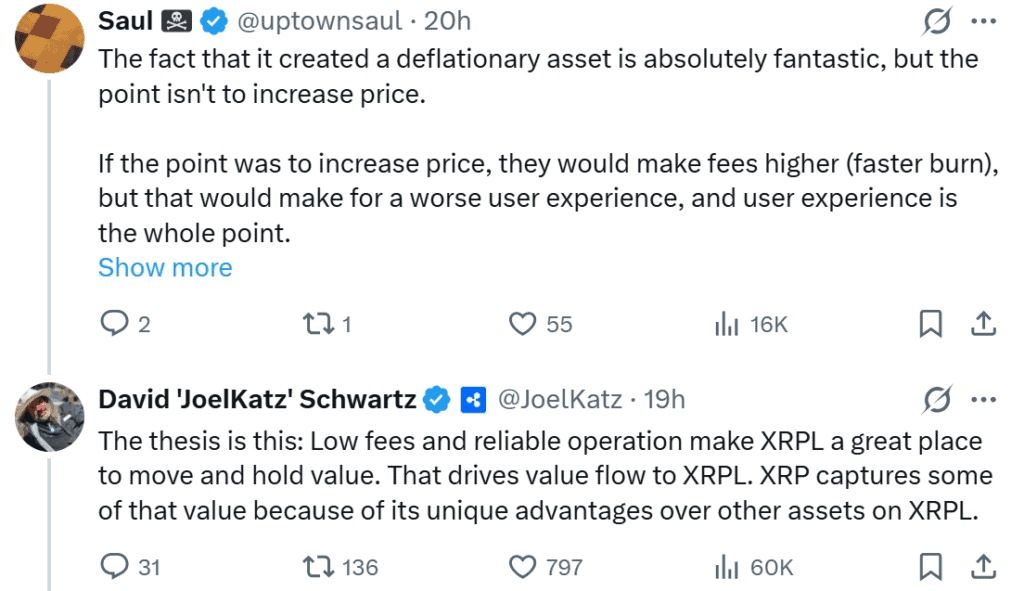
David Schwartz identifies XRPL autobridging as a mechanism through which XRP’s liquidity-bridge role can drive demand and directly influence its value. Source: X
“Low fees and reliable operation make XRPL a great place to move and hold value,” Schwartz wrote. “That drives value flow to XRPL. XRP captures some of that value because of its unique advantages over other assets on XRPL.”
His explanation distinguishes the usefulness of the ledger from the value of its native token. XRPL can attract transactions through its technical capabilities, while XRP benefits when those activities create demand for its specific functions.
XRP has a distinct position on XRPL because it is the network’s native asset. Unlike issued currencies and tokens, it does not require an issuer or a trust line to be held and transferred between accounts.
This makes XRP a potential intermediary for exchanges between different assets. XRPL’s built-in decentralized exchange supports auto-bridging, which can route trades through the token when the combined exchange rates are more favorable than a direct trade.
This functionality gives the token a practical role in connecting markets, although its use depends on available liquidity and competitive trading offers.
XRP’s functions extend beyond trading. Network transactions require XRP for fees, while accounts must maintain the token reserves for certain ledger operations. Transaction fees are permanently destroyed, helping protect XRPL against spam, while reserves limit the growth of ledger entries.
These mechanisms establish functional requirements for XRP, but their direct effect on market price remains uncertain. Fees are generally small, and the reserved token is held rather than permanently removed from circulation.
Schwartz’s argument centers on whether these structural advantages translate into sustained demand as financial activity develops on XRPL.
Schwartz believes widespread adoption of XRPL for financial applications without meaningful demand for XRP would be unlikely.
“I think a world where XRPL is highly successful in financial applications, but XRP does not have high demand and value is very unlikely,” he said.
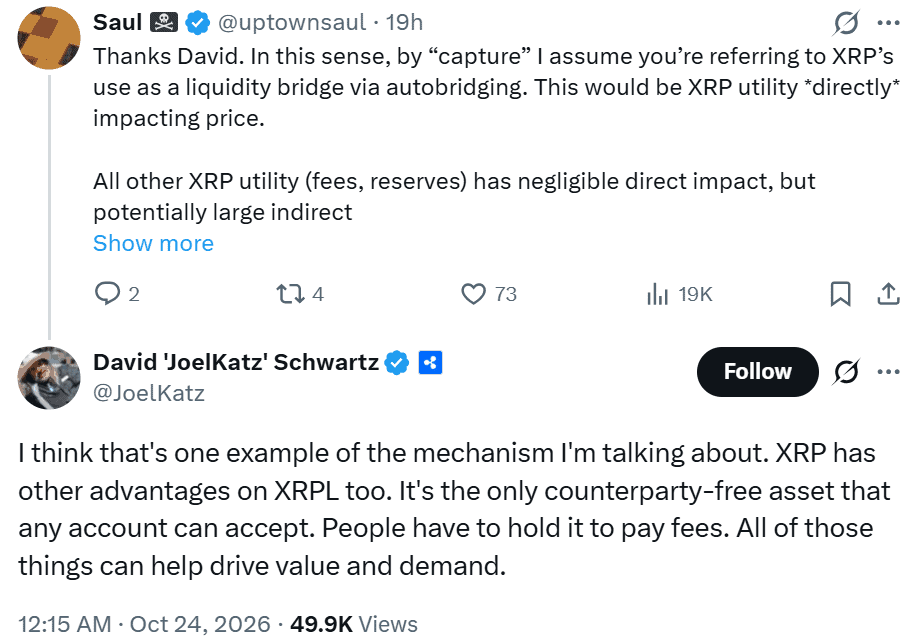
Schwartz highlights XRPL autobridging as a direct utility mechanism through which XRP usage can drive price, distinct from indirect effects such as speculation. Source: X
His position reflects XRP’s role in the ledger’s transaction and liquidity infrastructure. However, network adoption and token valuation remain distinct: activity could increase without a comparable rise in the token’s demand if users primarily transact in other assets or hold the token only briefly.
Market prices also depend on liquidity, investor expectations, and broader cryptocurrency conditions.
Schwartz’s thesis identifies two potential demand channels:
The strength of these channels will depend on actual usage, trading volumes, and liquidity conditions. Their existence demonstrates XRP’s utility but does not establish how much additional demand or price appreciation may result.
The community discussion also examined whether permanently destroying transaction fees directly increases XRP’s market value.
XRP supporter Saul argued that the burning mechanism was designed primarily to prevent spam rather than support the token’s price. Excessively high fees could also discourage network use.
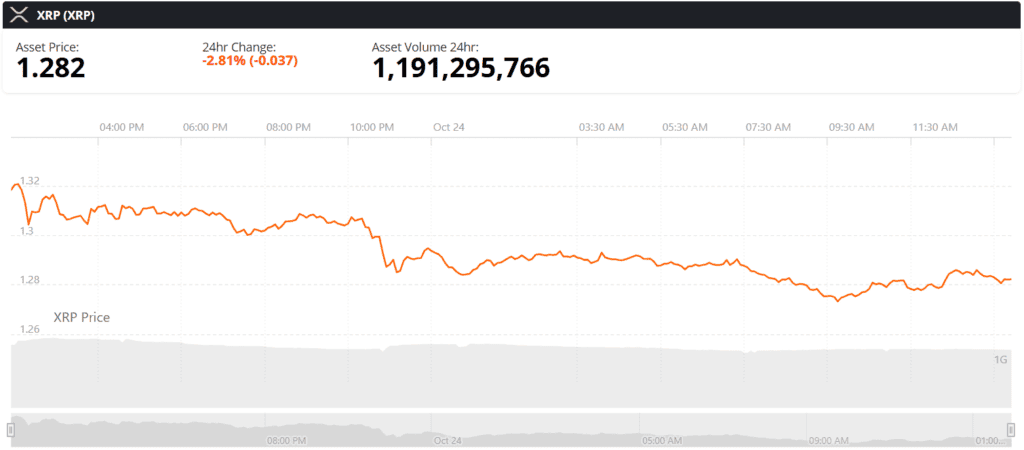
XRP price chart. Source: Brave New Coin
Although burning reduces the outstanding supply at the margin, its price impact depends on the amount destroyed relative to available supply and changes in demand. Schwartz’s argument places greater emphasis on XRP’s practical uses than on fee burning alone.
Schwartz also argued that XRP could retain a useful role even if Bitcoin remains the dominant settlement asset in the cryptocurrency market.
The token can facilitate exchanges between different assets on XRPL without becoming the final asset received or the primary store of value. Auto-bridging allows it to connect markets when trading conditions make that route advantageous.
Its potential usefulness therefore does not depend on displacing Bitcoin. However, the extent of XRP’s role will depend on actual liquidity and whether routing trades through the token offers a competitive result.
XRPL validator Vet has highlighted the network’s built-in decentralized exchange as another feature supporting its financial infrastructure.
The exchange allows users to trade supported assets through the ledger’s protocol, while auto-bridging can connect separate markets through XRP. The circulation of additional assets, including Ripple USD (RLUSD), could broaden trading opportunities on XRPL.
However, adding tokens does not automatically increase XRP demand. The effect depends on trading activity and whether the token provides an effective route between markets.
Schwartz’s comments present a utility-based case for XRP, emphasizing its role in transaction processing, account reserves, and liquidity provision rather than relying on token burning alone.
XRPL’s auto-bridging mechanism illustrates how XRP can connect markets without becoming the dominant settlement asset. Whether these advantages translate into sustained demand will depend on real-world usage, liquidity, and broader market conditions.
Schwartz’s thesis explains why XRPL adoption could benefit XRP, but the scale of that benefit remains dependent on measurable demand rather than network growth alone.